SAROS: DANCING WITH THE MADNESS OF CARCOSA
Saros Review: Housemarque Delivers Another Brutal, Bullet-Hell Masterpiece on PS5
Platform: PlayStation 5 (Exclusive)
Developer: Housemarque
Publisher: Sony Interactive Entertainment
Release Date: April 30, 2026
Price: $69.99
Ever since Housemarque redefined the AAA roguelike genre with Returnal, the gaming community has been waiting with bated breath to see how the studio would follow up its critical success. How do you top a game where atmosphere, relentless combat, and cosmic mystery merge into a perfectly punishing loop? The answer arrives in the form of Saros, a sci-fi action roguelike shooter that trades the haunting isolation of Atropos for the psychological decay of a hostile new world named Carcosa.
Make no mistake: Saros does not hide its brutal intentions. It is a fast, demanding, and visually spectacular bullet-hell experience that demands your absolute, undivided attention. It throws you into chaotic, neon-drenched encounters on an alien planet that actively wants you dead. While the narrative might not sink its emotional hooks into you quite as deeply as its predecessor, the core gameplay loop is an undeniable triumph that will keep you glued to your DualSense controller for hours on end.
Silence, Signals, and Psychological Decay
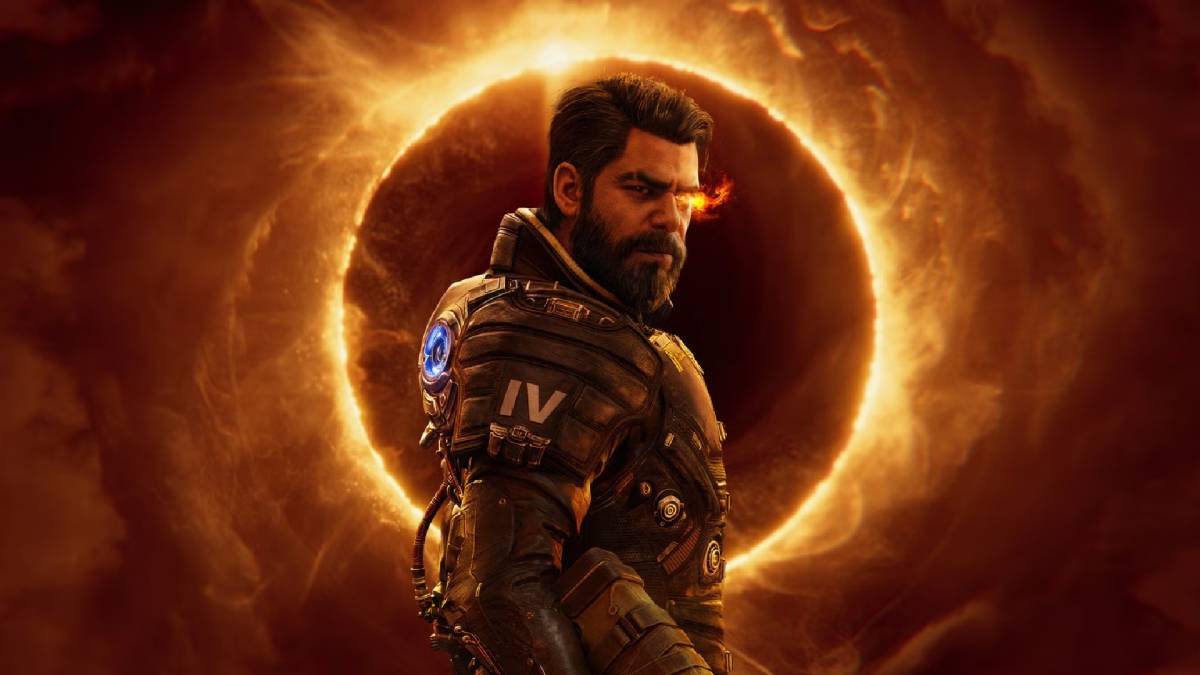
In Saros, players step into the boots of Arjun Devraj, a corporate enforcer working for the Soltari conglomerate. Assigned to the Echelon IV crew, Arjun is sent to the alien planet of Carcosa. The mission parameters are seemingly straightforward: investigate a colony of missing settlers and oversee the extraction of a highly coveted resource known as "lucenite." However, from the moment your boots touch the shifting, alien soil, an overwhelming sense of dread sets in.
The deeper you venture into Carcosa's hostile biomes, the more apparent it becomes that the planet is not just physically dangerous—it is a psychological meat grinder. The narrative heavily focuses on the slow mental unraveling of Arjun’s crew. When you return to "The Passage," your main hub area after a failed run, you bear witness to this deterioration firsthand. In one particularly striking early scene, Echelon IV’s commander, Sheridan, is forced to execute a crewmate who has completely lost his mind to Carcosa’s insidious influence.

Unlike Returnal’s Selene, who was entirely isolated, Arjun has a crew to interact with. Through repeated conversations at the ship and the shifting tones after every death, you watch paranoia, fractured beliefs, and cult-like obsession take root among your allies. Meanwhile, Primary—a massive robot managing communications with Soltari—serves as a chilling reminder that your corporate overlords care only about lucenite quotas, not human casualties.
Arjun himself is battling his own demons, searching for a mysterious woman from his past. Carcosa uses this against him, twisting his reality and taunting him during high-risk runs. The world-building is undeniably strong, bolstered by environmental storytelling via audio logs, text entries, and data recovered from doomed expeditions. The voice acting is stellar (featuring Rahul Kohli and Jane Perry), yet the story feels slightly less gripping than the sheer, lonely terror of Returnal. The crew members often feel like narrative checkpoints rather than fully realized emotional anchors, but the overarching mystery of Carcosa remains compelling enough to push you forward.
Chaos, Movement, and Total Control
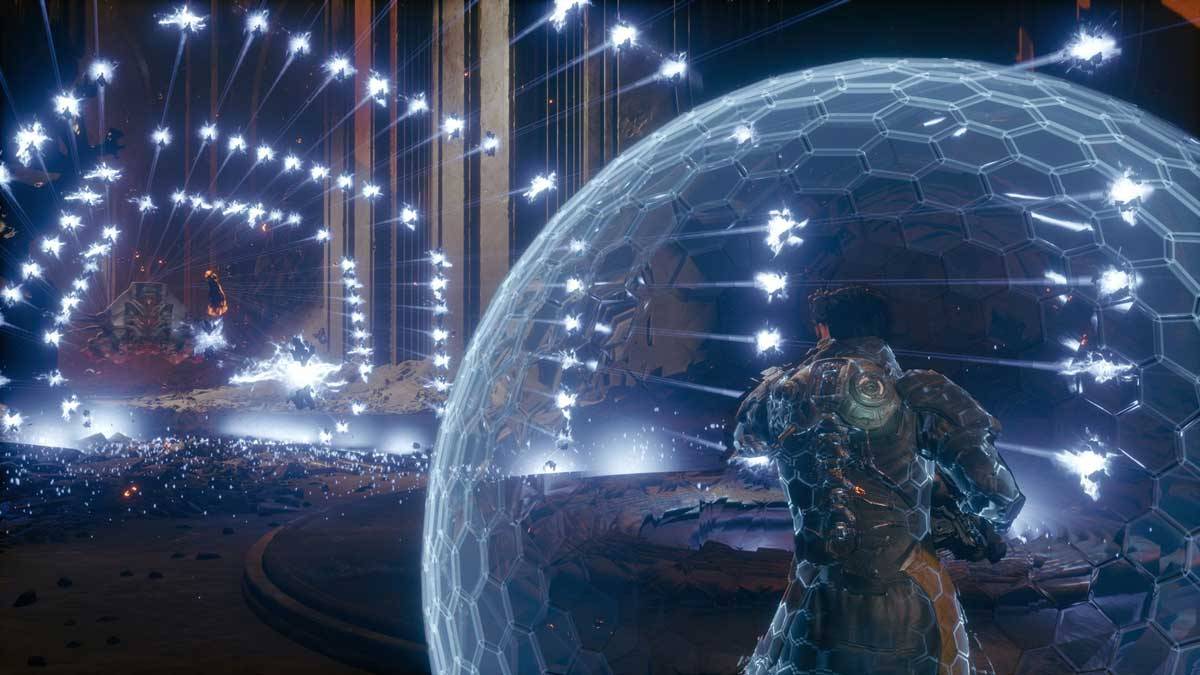
If you are here for the combat, Saros delivers an absolute masterclass. The gameplay is exactly what you expect from Housemarque: a hyper-reactive, 60-frames-per-second dance of death. The screen regularly erupts into what can only be described as a lethal light show, forcing players to prioritize movement over everything else.
In Saros, standing your ground is a death sentence. Enemies will aggressively flank you, raining down complex projectile patterns that fill the screen. Survival requires a "run first, shoot second" mentality. You must constantly analyze your positioning, maintaining situational awareness to know exactly when to unleash your arsenal and when to tactical retreat. Once this rhythm clicks, clearing a room of hostile alien monstrosities feels incredibly satisfying.
The traversal mechanics have been expanded to give you more agency in these chaotic firefights. The grappling hook makes a triumphant return, allowing for rapid repositioning across multi-tiered arenas. New additions, such as a high-risk, high-reward parrying system, add layers of timing-based depth. If you nail the parry, you gain a massive advantage; if you miss, you take punishing damage.

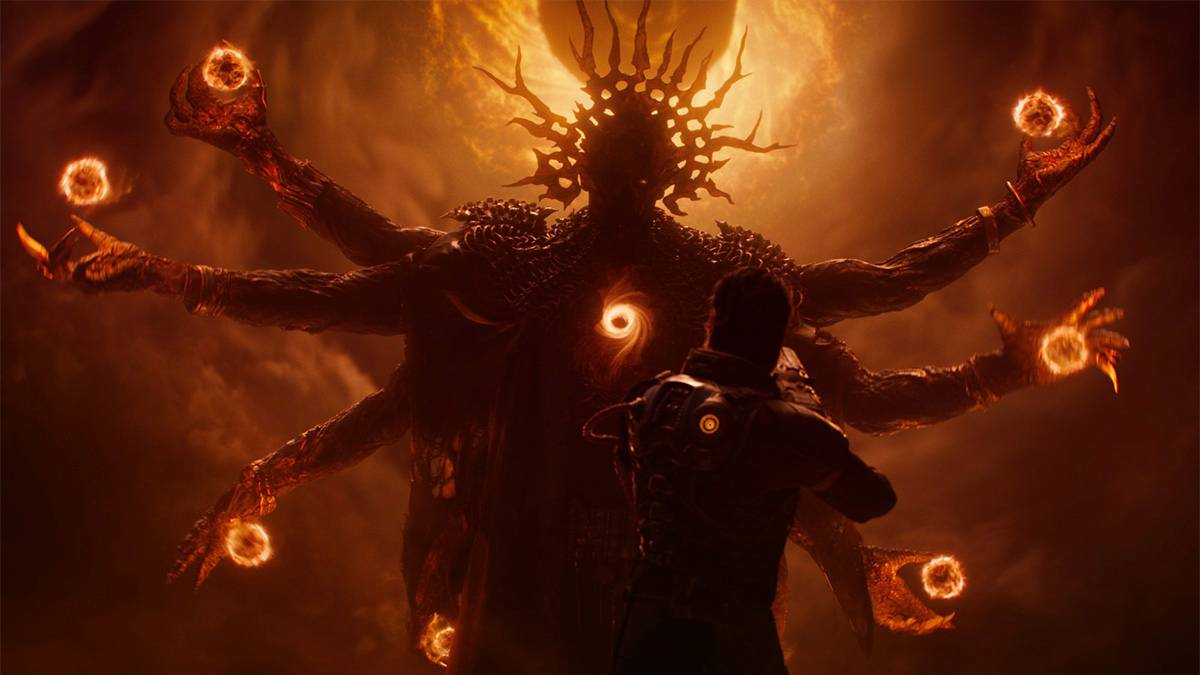
Boss encounters are massive, multi-phase spectacles that test everything you’ve learned. A boss named 'Prophet' will brutally test your dashing iframes and spatial awareness, while 'Bastion' forces you to master verticality and jump pads. These fights are intense, palm-sweating trials that encapsulate Housemarque’s arcade roots within a modern AAA wrapper.
Progression: The Armor Matrix and The Eclipse
As a roguelike, Saros is built upon the foundation of repeated deaths, but dying never feels like a waste of time. Your runs are governed by a Proficiency system; the higher your proficiency, the better the weapon drops you will find scattered across Carcosa.
However, Saros leans a bit more into approachability with its meta-progression. Enter the Armor Matrix, a permanent skill tree that gradually increases Arjun’s survivability and offensive capabilities. By collecting Lucenite—the game's primary currency—during your runs, you can purchase permanent upgrades. While you do lose some resources upon death, the constant progression of the Armor Matrix ensures that every run contributes to making you tangibly stronger.
For those looking to push the difficulty envelope, Housemarque introduces the Eclipse system. At certain points in a level, Arjun can manually trigger an Eclipse. This drastically escalates the difficulty: the environment shifts, enemies become hyper-aggressive, and new "corrupted" projectiles enter the fray. The trade-off? The rewards scale massively. It’s a brilliant risk/reward mechanic that asks the player just how much they are willing to wager on their current build. While sometimes mandatory for progression, the Eclipse system generally acts as a brilliant difficulty modifier that puts agency directly in the player's hands.
Clean, Loud, and Technically Flawless
Visually, Saros is a melancholic masterpiece. Rather than chasing ultra-realism, Housemarque focuses on striking art direction, atmosphere, and crucial visual readability. Carcosa is bathed in a sickly, yellow-dominant color palette that reinforces the themes of decay and psychological instability. It’s a beautifully unsettling world that makes you feel perpetually unwelcome.
From a technical standpoint, the game is a marvel. As a PlayStation 5 exclusive, it utilizes the hardware flawlessly. Even when the screen is absolutely choked with enemies, particle effects, and laser beams, the frame rate remains a rock-solid 60fps. There are no noticeable stutters, ensuring that your deaths are always your fault, never the hardware's.
Furthermore, Housemarque continues to be the industry gold standard for DualSense integration. The haptic feedback adds incredible tactile immersion to the experience. You can feel the distinct kick of different alien weaponry, the subtle pitter-patter of environmental hazards, and the tension of a perfectly timed parry right in your hands. It elevates the combat from feeling like you are simply pressing buttons to actively surviving a digital warzone.
The sound design is equally purposeful. While the original soundtrack might not reach the iconic, haunting heights of Returnal's "Hyperion" theme, the audio cues are pristine. You will learn to identify off-screen enemies purely by their specific screeches, allowing you to react blindly to threats—a vital skill in a bullet-hell environment.
The Verdict: A Familiar but Refined Chaos
Saros does not reinvent the formula that Housemarque perfected in 2021, but it refines it into a slightly more approachable, deeply satisfying package. It takes the criticisms of its predecessor to heart,