KEEPER REVIEW: THE LIGHTHOUSE, THE BIRD, AND A SYMPHONY OF SOLITUDE
Keeper Review: A Visually Staggering Masterpiece Hindered by Gameplay Design
Telling a compelling, emotionally resonant story without uttering a single word of dialogue is a rare feat in the interactive medium. It is an approach that requires immense confidence, careful environmental design, and a deep understanding of visual pacing. Keeper, the latest title from the venerable Double Fine Productions—published by Xbox Game Studios—attempts to do just that. Released on October 17, 2025, for PC and Xbox Series X|S, Keeper promises a psychedelic, abstract journey into a corrupted world. But while it succeeds as a living, breathing art exhibit, does it succeed as a video game?
Keeper is a game that immediately captivates the senses. Playing as a sentient, walking lighthouse guiding a lost bird through a landscape consumed by shadow, you are presented with a premise as charming as it is bizarre. However, beneath the striking visuals and experimental narrative, there are significant gameplay cracks that prevent this experience from reaching its full potential. Here is our comprehensive review of Keeper.
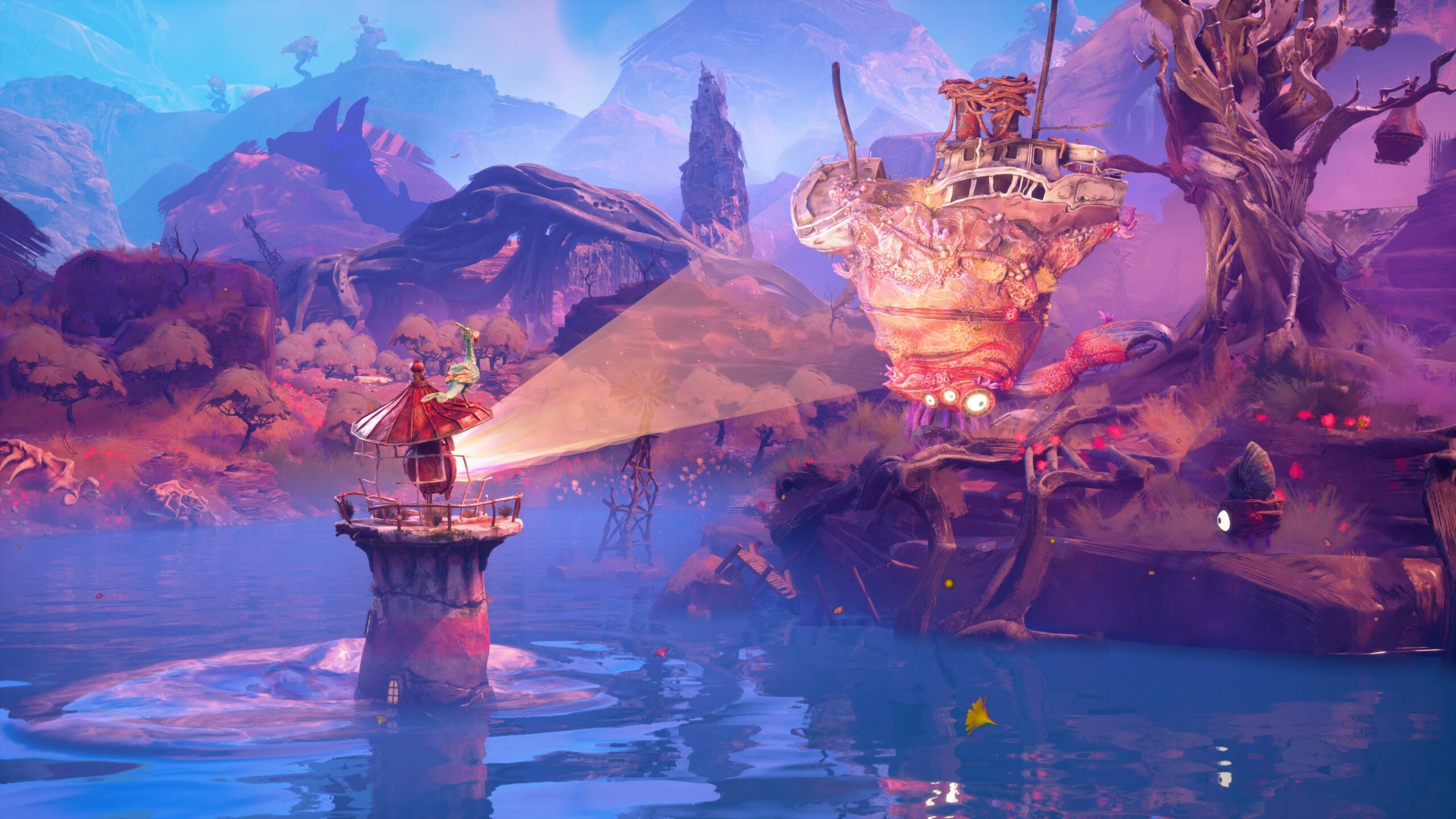
Storytelling: A Wordless Odyssey
Keeper is a game that makes you feel small, curious, and profoundly uncertain about the world around you. From the moment the game boots up, you are not given clear objectives, tutorial pop-ups, or narrative exposition. You are simply dropped into a landscape and expected to trust your instincts. This absence of hand-holding is its greatest strength, as it forces the player to engage with the world on its own terms.
The protagonist is a literal lighthouse that eventually breaks free from its foundation and sprouts four oddly endearing, wobbling legs. A small, displaced bird builds a nest on its roof, and together, they embark on a journey to traverse a world consumed by corruption—a darkness that only your beam of light can push back. While the concept sounds absurd, it is executed with a heartfelt, melancholic grace. By the time the credits roll, Keeper manages to deliver a poignant message about loneliness and guidance without ever needing a script. If you are willing to meet the game halfway, the emotional beats hit surprisingly hard.
Gameplay: The Inconsistency of Puzzles and Navigation
The gameplay in Keeper is divided into two pillars: navigating increasingly complex linear levels and solving environmental puzzles. The puzzles are not merely an addition to the experience; they define it. Nearly every step you take in Keeper feels like a puzzle segment. Unfortunately, this is where the game encounters its most significant design flaws.
A Parade of One-Off Mechanics
The puzzles in Keeper largely lack depth. Each biome introduces a specific mechanical concept, exhausts it, and then discards it entirely before moving on to the next section. There is no sense of evolving mastery or building complexity; instead, you get a disjointed parade of one-off mechanics that never truly develop into a cohesive system. Furthermore, the difficulty curve is nearly flat. Most puzzles are so straightforward that you will breeze through them without any genuine contemplation. The solutions present themselves with such ease that the "challenge" of the game feels more like a scenic tour than a test of wits.
The Camera: A Mechanical Nightmare
The most frustrating element of Keeper—one that actively works against the player throughout the entire experience—is the camera system. The game features no manual camera control. The right analog stick is dedicated to character movement, while the left stick is used to aim your light beam. The camera, meanwhile, moves automatically, constantly snapping to angles that are rarely helpful and often jarring.
This becomes an absolute disaster during the puzzle sections where you must hold the left trigger to manually aim your beam while simultaneously trying to position your character. You are left wrestling with the auto-camera and the manual aim simultaneously. It is a baffling design decision that ruins the flow of large sections of the game. Completing Keeper means fighting the camera just as much as you fight the corruption.
A Lack of Meaningful Content
For players who enjoy exploration, Keeper will feel incredibly empty. There are no meaningful side objectives, collectibles, or incentives to deviate from the linear path. The only "extras" are a few hidden areas where you can restore a statue to trigger an achievement. Beyond that, the game is a strictly guided, linear path from the beginning to the end. While the movement mechanics do evolve as the lighthouse sprouts new forms and abilities, the lack of replayability and deeper content makes the game feel quite short and shallow.
Audiovisual Presentation: A Feast for the Senses
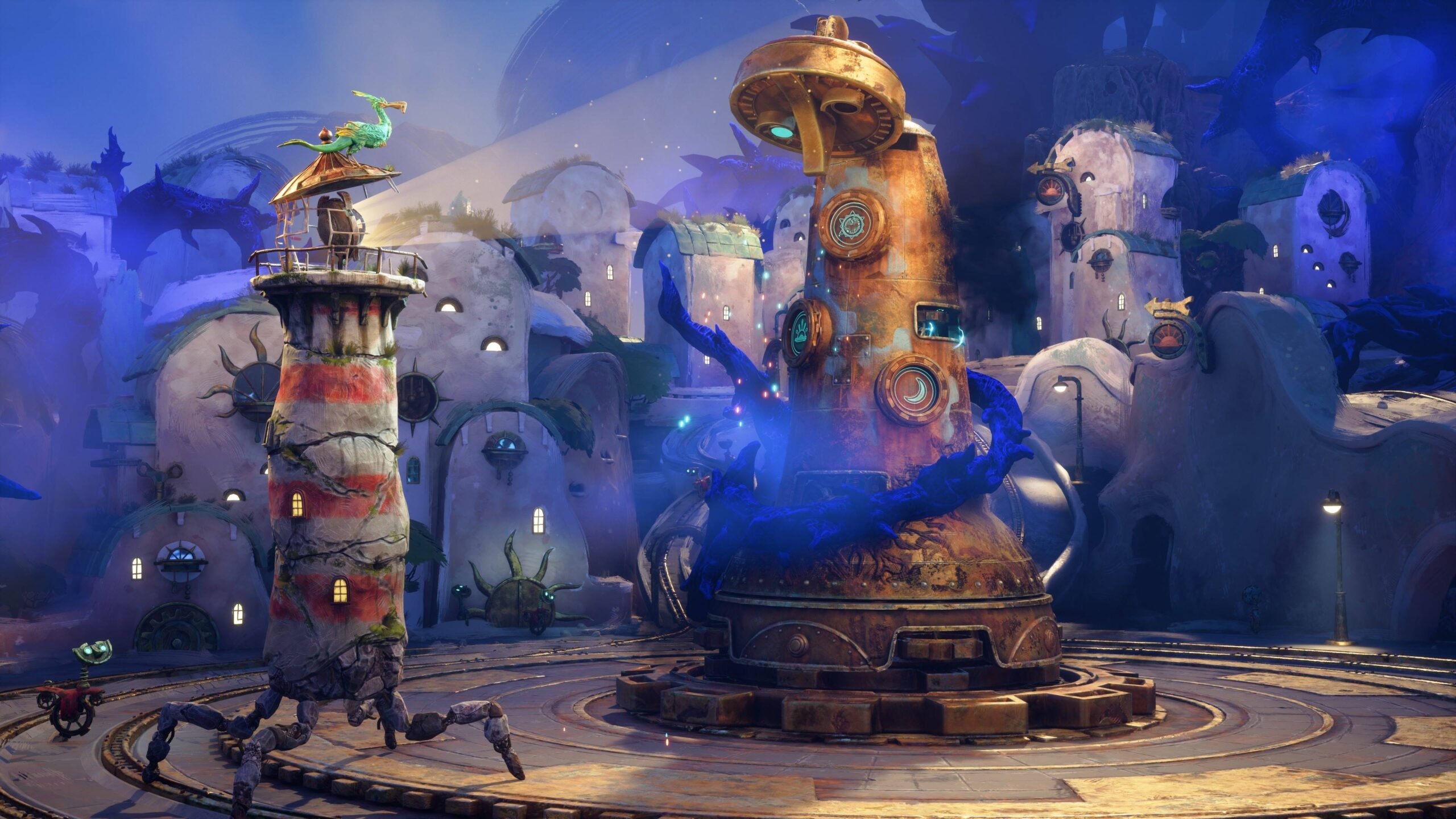
If Keeper fails in its gameplay, it succeeds triumphantly in its artistic vision. The game features a highly abstract, dreamlike art style that feels like wandering through a modern art gallery. The visuals are deliberately vague, playing with color and shape in ways that make you question your own perspective.
Evolution of Art
Just as the lighthouse evolves in its movement and physical form, the visual style undergoes a dramatic metamorphosis. The game transitions from muted, painterly, canvas-like textures to a vibrant, neon-drenched explosion of light, reminiscent of classic, high-fidelity music visualizers. Some levels are so experimental with color palettes that the effect can be legitimately dizzying. While we noticed the colors appearing slightly "washed out" across some platforms (even with HDR enabled), the overall aesthetic remains striking and memorable.
Performance
Performance-wise, the game is a stable rock. Whether on the Xbox Series X or our test PC (Ryzen 9 5900x, RTX 3080 Ti), the game runs flawlessly. It is not a particularly demanding title from a computational perspective, ensuring that the visual experience is never interrupted by stuttering or frame rate drops. However, on the PC version, the lack of native ultrawide support is a glaring omission, forcing players to deal with distracting black bars.
Sound Design
Given the lack of dialogue, the musical score and sound design must do the heavy lifting for the narrative, and Keeper succeeds here. The soundtrack is therapeutic and soothing during the exploration segments, building into a tense, gripping soundscape when the corruption encroaches. It is a top-tier audio package that pairs perfectly with the visual evolution.
Final Verdict: Ambition vs. Execution
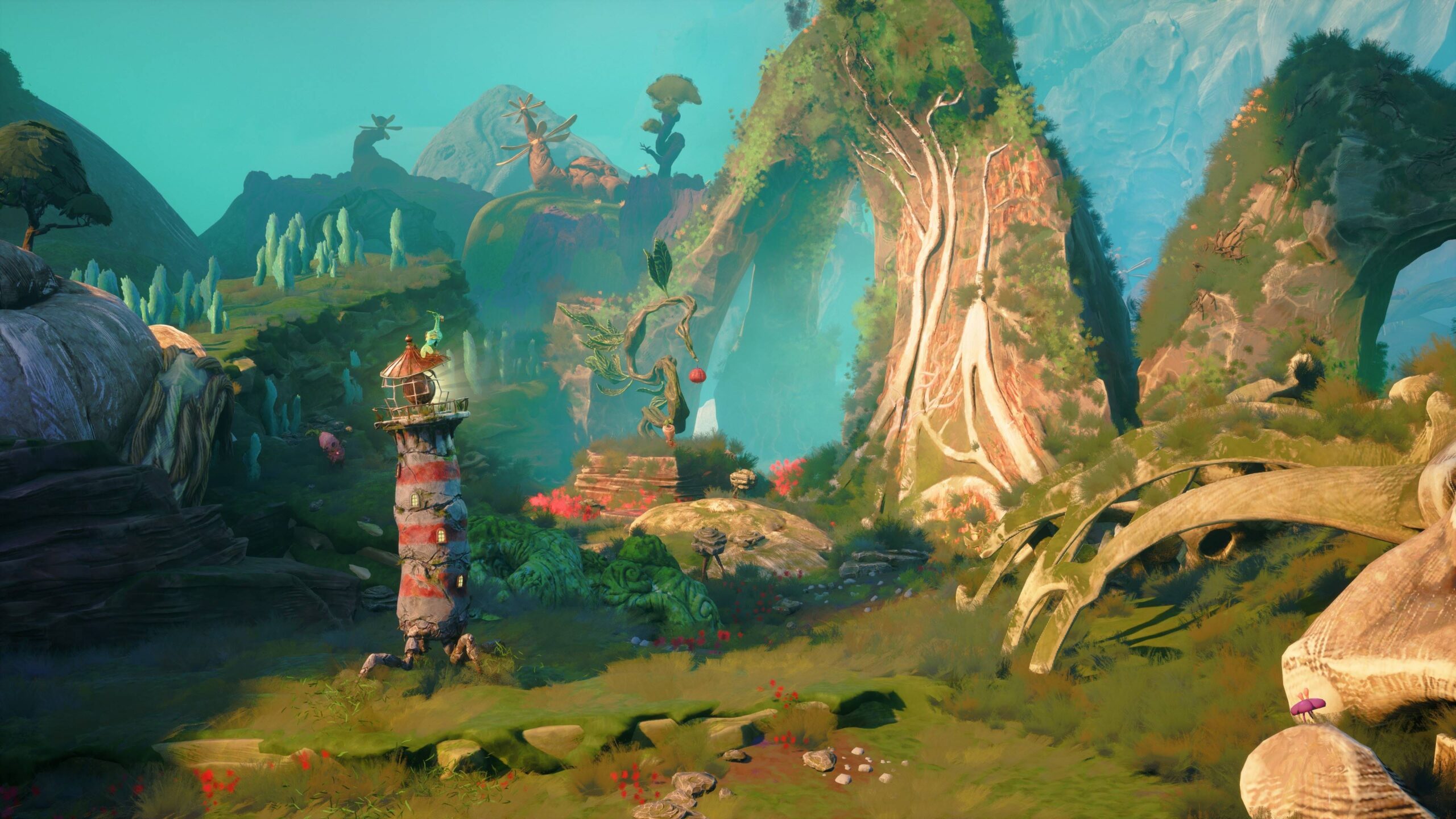
Keeper is a game of distinct dualities. It leans heavily on its artistic credentials, its abstract visual beauty, and its unusual premise, and in those specific areas, it delivers a unique experience. It is a living canvas that asks the player to appreciate it for its quiet, therapeutic nature.
However, these artistic strengths cannot fully compensate for shallow, uninspired puzzle design, a fundamentally frustrating camera system, and a lack of depth beyond the strictly linear path. It is a beautiful, abstract journey that is constantly undermined by gameplay mechanics that fail to match the sheer ambition of the studio’s vision.
If you are the type of player who can overlook mechanical shortcomings to embrace an "odd charm" and simply wants a beautiful, wordless experience, Keeper provides a quietly unforgettable, soul-touching journey. But if you are coming for the puzzles, you will likely find yourself wishing for a much more refined design.
| Category | Verdict |
|---|---|
| Visual Art Style | Captivating, abstract, and highly unique. |
| Sound & Music | Top-tier; highly therapeutic and cohesive. |
| Puzzle Design | Shallow, repetitive, and lack progression. |
| Controls/Camera | Frustrating, automated, and clunky. |
Final Score: 6.5 / 10