DOOM ETERNAL: THE RELENTLESS FIRE AND FURY OF A PERFECT COMBAT LOOP
DOOM Eternal Review: A Masterclass in Aggressive Chaos and Forward Momentum
There are few franchises in the history of video games that understand their own identity quite as well as DOOM. DOOM Eternal revels in absolute chaos, indulging a player's need for aggressive forward momentum and empowering you at every conceivable turn. Following the wildly successful and critically acclaimed 2016 reboot, this highly anticipated sequel has been cooking in the developmental oven for quite a while. After taking an extra few months to get its ducks in a row and apply a final coat of polish, id Software has delivered a confident, expansive, and surprisingly story-driven follow-up.
The "no-frills, does exactly what it says on the tin" approach hearkens back to a simpler era of arcade shooters. Yet, it manages to deliver this nostalgic brutality with a modern smoothness and AAA polish that elevates it above its peers. If you are looking for a first-person shooter that demands your full attention, tests your reflexes, and rewards relentless aggression, you have come to the right place. Here is our in-depth review of DOOM Eternal.
The Combat Loop: Aggression as a Means of Survival
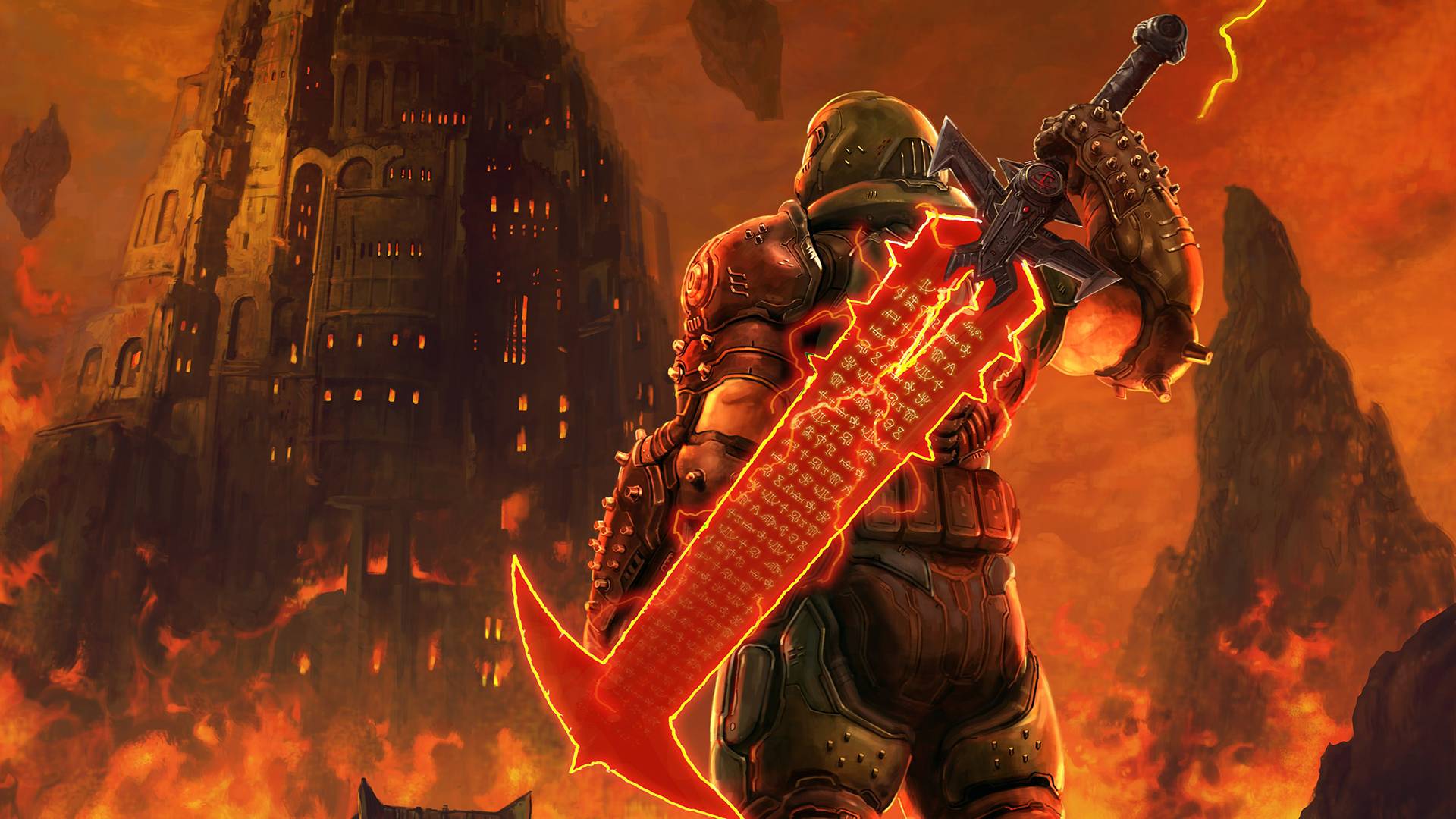
The core DNA of what makes this legendary series so special has absolutely been retained. The tight, funneling corridors that push you inexorably forward from one bloody encounter to the next are very much present and accounted for. However, DOOM Eternal takes the "push-forward" combat philosophy introduced in the 2016 reboot and cranks it up to eleven.
In most traditional shooters, taking damage means retreating to cover and waiting for a health bar to regenerate. In DOOM Eternal, retreating is a death sentence. The only way to survive is to dive headfirst into the demonic horde. The game transforms moment-to-moment engagements into frantic, high-stakes puzzles.
Resource management is a massive part of this loop. You will frequently find your engagements devolving into a mad dash for ammunition as your supplies run dry—which happens far more often than you might initially expect. This is a deliberate design choice by id Software. To get health, you must perform brutal Glory Kills. To get ammo, you must carve up enemies with your chainsaw. To get armor, you must set demons ablaze with your shoulder-mounted flame belch. It is an intricate, violent dance that forces you to constantly cycle through your tools, doing a wonderful job of making you feel as badass and demonically empowered as possible.
A Masterclass in Movement and Verticality
While the claustrophobic corridors return, there is a distinct sense that the developers wanted to expand their horizons. This is especially evident in the self-contained combat arenas, which play out more like quick-fire movement puzzles than the standard "boots on the ground" firefights you would expect from a typical modern shooter.
In fact, movement and traversal have become an even greater focus in this new installment. The introduction of the dash mechanic changes the pace entirely, allowing you to sidestep projectiles and close the gap on fleeing demons in the blink of an eye. There is a renewed emphasis on verticality within each level that truly pushes the boundaries of your expectations. You are no longer just fighting on a flat plane; you are bouncing off jump pads, swinging from monkey bars, and scaling massive structures while raining down rockets from above.
The Grappling Hook: A Game Changer
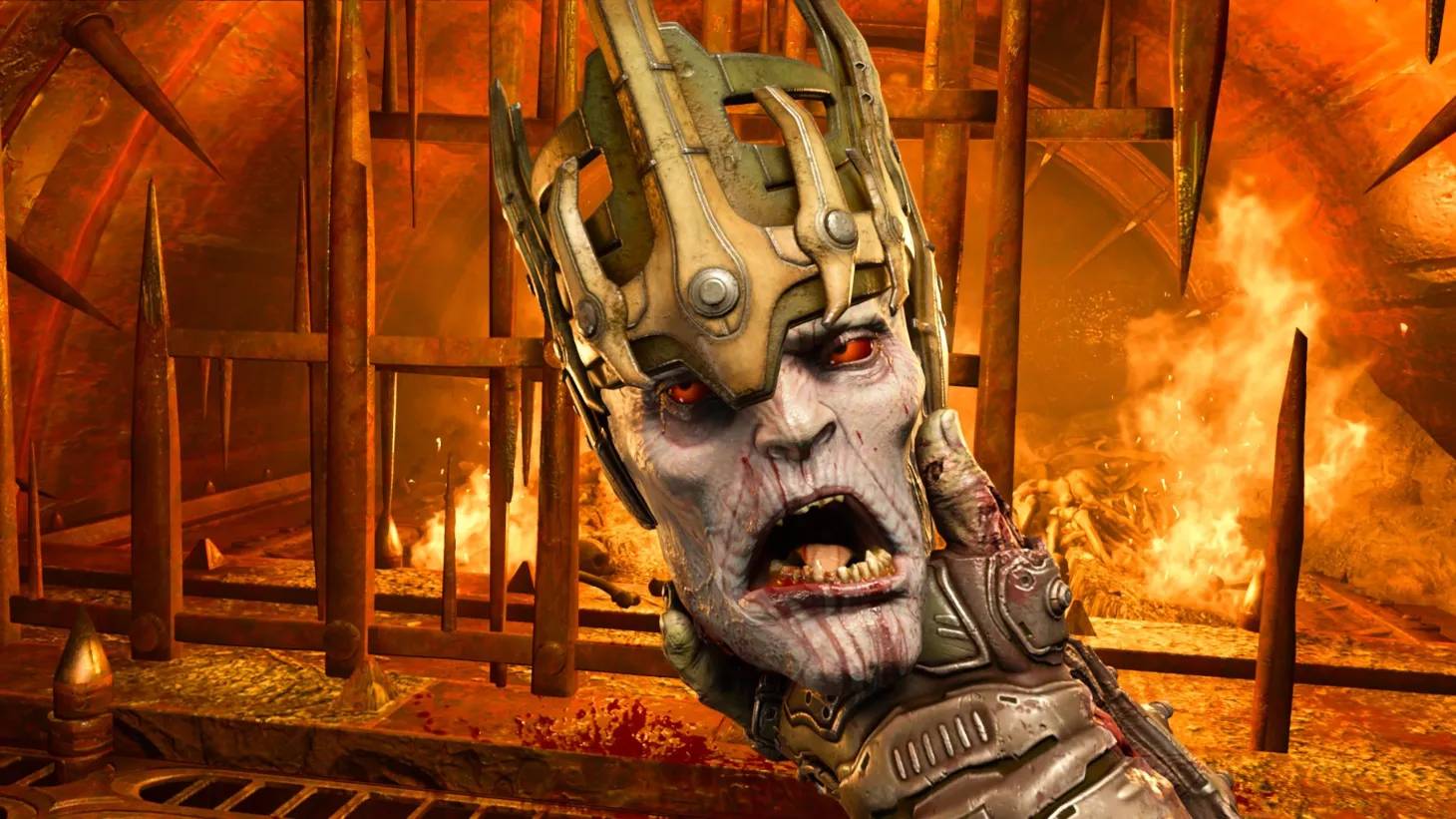
Perhaps the most exciting addition to the traversal toolkit is the new grappling hook attachment for the Super Shotgun (affectionately known as the Meat Hook). This provides an excuse for somehow even more gruesome execution animations, but more importantly, it plays directly into the game's core idea of relentless momentum and always being light on your toes. Grappling onto a flying Cacodemon, pulling yourself through the air, and delivering a point-blank blast of buckshot is an incredibly satisfying loop. It encourages you to bring the fight up close and personal, while still allowing for smart navigation and flanking maneuvers.
The Arsenal: Tools of Demonic Destruction
The gradual march toward acquiring new guns and equipment is a deeply satisfying and rewarding loop that keeps you heavily invested, even during the rare moments when combat repetition slowly starts to creep in.
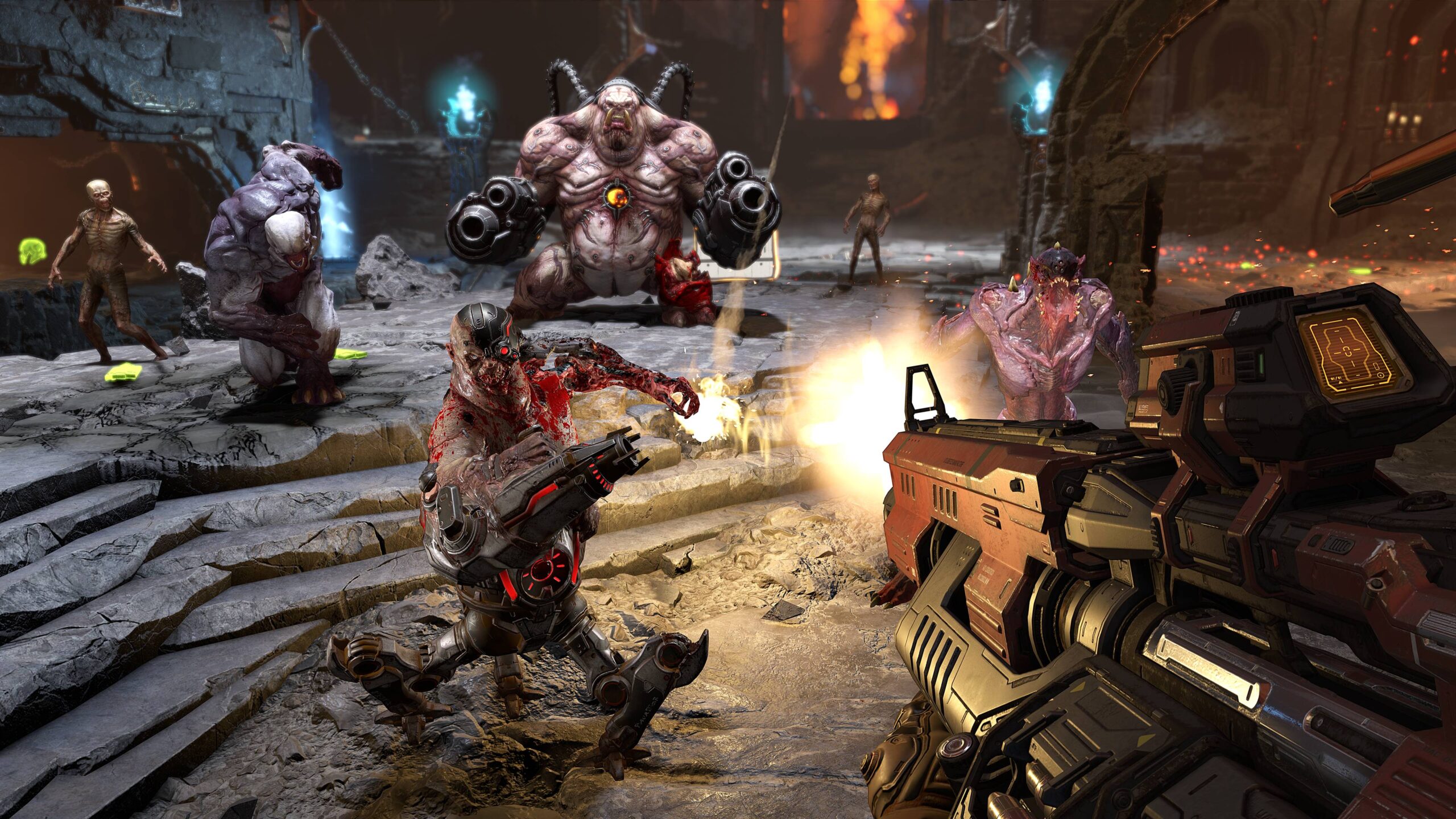
Weapon design and handling are, frankly, best-in-class. Every single firearm in your arsenal serves a specific tactical purpose. The Plasma Rifle excels at shattering energy shields, while the Heavy Cannon's precision bolt is perfect for blowing the arm cannons off a Mancubus. You are constantly required to analyze the battlefield, identify the biggest threats, and select the appropriate weapon to dismantle them.
You will always be on the lookout for hidden upgrade stations scattered throughout the levels. Being able to select which weapon modifications and suit abilities to enable first is a lovely touch that adds a welcome layer of RPG-lite progression to the experience. Furthermore, the gamepad controls (we reviewed the game playing on the Xbox One X) are masterfully mapped. In a game this fast, clunky controls would be fatal, but the developers have ensured the inputs are as intuitive and responsive as possible.
Narrative and World-Building: A Surprising Focus
When you think of DOOM, deep lore and rich storytelling are not usually the first things that come to mind. However, from the very outset of DOOM Eternal, you will recognize the sheer scale of the studio's narrative ambition.
Cutscenes offer significantly more narrative context than ever before. We get a closer look at the history of the Night Sentinels, the origins of the Doom Slayer, and the cosmic bureaucracy of Heaven and Hell. While you can still choose to ignore the lore entirely and just focus on the shooting, players who take the time to read the codex entries and watch the cinematics will find a surprisingly fleshed-out universe. It gives context to the carnage, explaining exactly why the Slayer is so angry and why the demonic forces fear him above all else.
Audiovisual Presentation: A Hellish Spectacle
From a technical presentation standpoint, DOOM Eternal is one of the most graphically impressive and smooth performance offerings we've seen to date. Running on the id Tech 7 engine, the game is a visual marvel. The environments are vast, varied, and dripping with gothic, hellish detail. The demons themselves show visible battle damage as you shoot them, with chunks of flesh and armor flying off to dynamically indicate how close they are to death.
The frame rate is buttery smooth, locked in to handle the blistering speed of the combat without breaking a sweat. We have absolutely no complaints in the optimization area whatsoever.
Minor Stumbling Blocks: Where Eternal Falters
While the overall experience is stellar, there are a couple of stumbling blocks holding DOOM Eternal back from absolute perfection.
Level Geometry Issues
The level geometry is incredibly complex and detailed, which looks fantastic but comes with a mechanical cost. In the heat of the moment, we occasionally found ourselves getting stuck on certain pieces of scenery—a stray piece of rubble or a protruding wall edge. Given the immense speed of combat and the fact that standing still equals death, this had a tendency to break the flow at key, inopportune moments. Although it is a fairly rare occurrence, it is something worth noting, particularly if you are planning to challenge yourself by exploring one of the four higher difficulty levels beyond "Normal."
An Overbearing Soundtrack
The sound design, on the whole, is impressive. The guttural roars of demons and the booming punch of your shotgun are excellent. However, the soundtrack itself is often exceptionally overbearing. The heavy metal influence totally fits the brand's tone, but it is overused to the point where it occasionally becomes an annoyance. Some combat arenas and platforming sections are intense enough without the need to have djent guitar riffs blasted into your ears at every turn. A "less is more" approach in certain quieter exploration sections would have nicely complimented the action and given the player a chance to breathe.
Multiplayer and Post-Launch Modes
It is important to note the multiplayer offerings. At the time of our primary review testing, we were unable to fully stress-test the online servers for the new Battlemode competitive offering. This asymmetrical multiplayer mode sees two players take on the role of powerful demons working together to hunt down one fully decked-out Slayer. It is a unique take on the genre that focuses on strategy and resource denial rather than traditional deathmatch mechanics.
There is also an Invasion mode slated to be added sometime after launch, which will allow players to drop into other people's single-player campaigns to take control of demons—a mechanic highly reminiscent of the invasion systems found in the Dark Souls franchise.
The Final Verdict
DOOM Eternal is a triumphant return to Hell. It successfully builds upon the incredible foundation laid by its 2016 predecessor, expanding the scale of its world, deepening its combat loop, and introducing phenomenal traversal mechanics that keep the action fresh from start to finish. The weapon design is unparalleled, and the sheer adrenaline rush of surviving a massive demonic encounter by the skin of your teeth is a feeling very few games can replicate.
While minor gripes with environmental geometry and a somewhat exhausting audio mix occasionally break the immersion, they are not enough to derail the blood-soaked joyride. Because multiplayer is being pitched as a key companion to the single-player campaign, its long-term viability will rely on a healthy community. But judging the single-player campaign on its own merits, id Software has delivered an absolute must-play shooter.
Final Score: 8.5 / 10