Rusty Rabbit Review: A Charismatic Lead Cannot Save This Mindless Grind
In the world of video game development, innovation is the lifeblood of the industry. However, there is a fine line between creative ambition and misguided focus. Rusty Rabbit, the latest 2D platformer from developer Nitroplus and publisher NetEase Games, is a textbook example of what happens when a studio bets everything on a single charismatic character while neglecting the foundational gameplay that makes a game worth playing. While the title boasts high-production cutscenes and a protagonist with genuine personality, it ultimately collapses under the weight of its own repetitive design.

The Grumpy Protagonist: Stamp’s Burden
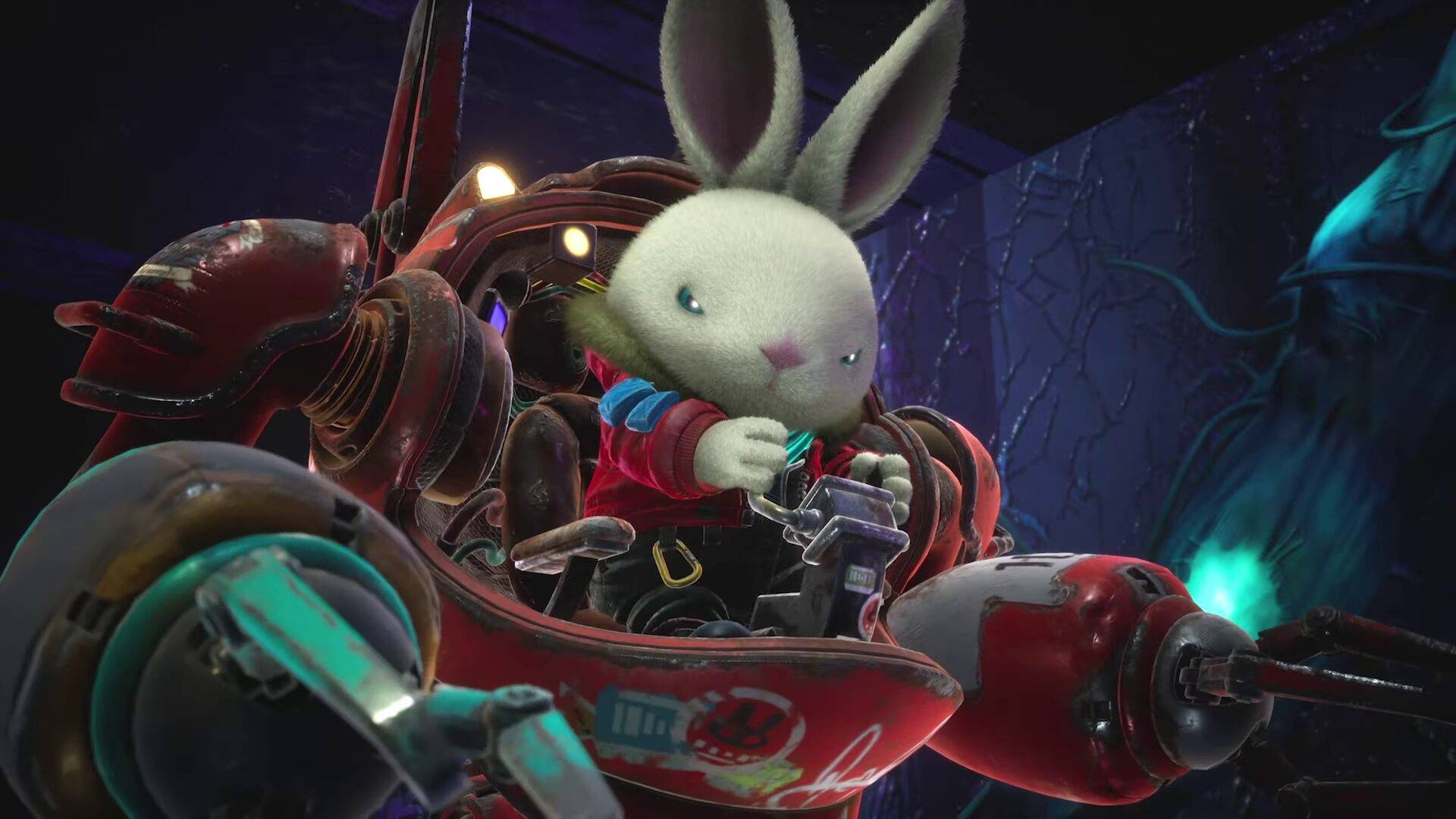
The game takes place in a post-apocalyptic, post-human world where the remaining inhabitants—mostly fluffy rabbits—scavenge for scraps left behind by their former masters. The main protagonist is Stamp, an old, cynical rabbit who operates a heavy-duty exoskeleton to scrape by in this harsh new reality. Stamp is a legitimately well-written character; he’s grumpy, weary, and possesses a cynical wit that feels like it belongs in a top-tier AAA title.
When you experience the game's high-quality cutscenes and stellar voice acting, you are immediately lured into a sense of false security. The presentation is professional, and Stamp’s persona is genuinely magnetic. It is an immense disappointment, then, to find that the gameplay loop is entirely disconnected from the quality of the narrative. It is a classic case of “all style, no substance,” where the marketing (and the opening hour) tries to convince you that you are playing a deep adventure, only to reveal a hollow shell beneath.
Gameplay: A Cycle of Mindless Destruction
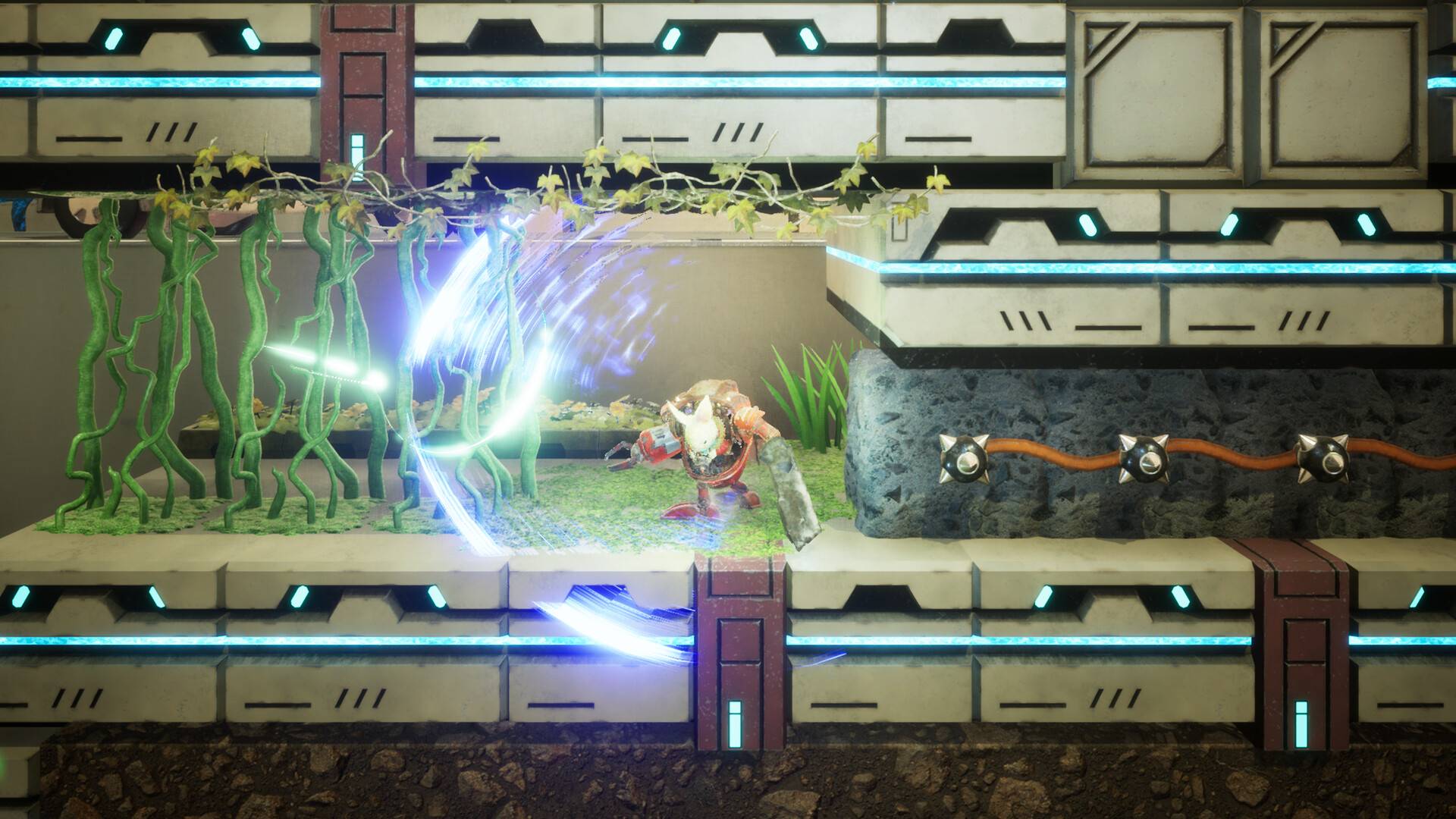
At its core, Rusty Rabbit describes itself as a Metroidvania-like 2D platformer. In practice, however, it is a game defined by one singular, mind-numbing action: destroying junk cubes. The levels are filled with thousands of these boxes, placed with such suspicion of symmetry that the environments feel less like organic worlds and more like puzzles in a spreadsheet.
The Grind Loop
The gameplay loop is painfully simplistic:
- Enter a dungeon: Traverse a linear path filled with junk cubes.
- Destroy cubes: Mash your attack button to clear the path and collect screws and scrap.
- Upgrade: Use the collected scrap to improve your exoskeleton.
- Repeat: Do it again in the next stage.
While many games utilize a "grind" mechanic, they usually back it up with meaningful exploration, diverse enemy encounters, or interesting platforming challenges. Rusty Rabbit lacks all of these. The levels, despite being in different locations, feel functionally identical because the design is always dominated by the same uniform cubes. There is no sense of evolving mastery or building complexity; you are simply doing the same menial task for hours on end.
Exoskeleton Mechanics
Stamp’s exoskeleton allows for standard actions like jumping, gliding, and drilling. While new weapons are introduced as you progress—and a few of these are admittedly fun to wield—the combat feels superficial. The skill tree provides a light RPG layer where you can invest XP to unlock new suit abilities, which is perhaps the only feature that makes the game feel remotely "tolerable." It offers a slight sense of progression, but it isn’t enough to mask the underlying monotony.
Presentation vs. Execution
Visually, Rusty Rabbit is a game of contrasts. The cutscenes are polished and engaging, showing off an art style that fits the post-apocalyptic setting well. However, once you enter actual gameplay, the visuals fall flat. The over-reliance on the "junk cube" aesthetic makes it nearly impossible for any specific level to have a unique visual identity. You are constantly looking at the same boxy textures, which eventually blend together into a singular, boring experience.
On the sound design front, the voice acting is the game's saving grace. Both the English and Japanese performances for Stamp are praiseworthy, lending a gravity to the story that the game’s mechanics simply don't deserve. If only the developers had invested as much effort into the level architecture as they did into casting and direction, the final product could have been something truly special.
Final Verdict: Ambition Misplaced
Rusty Rabbit is a cautionary tale for developers. It proves that a great main character and high-quality cutscenes cannot compensate for a lack of engaging mechanics. With repetitive gameplay, a lack of level diversity, and a focus on mindless grinding, it is very difficult to recommend this title to anyone—even fans of the platformer genre.
If you are looking for a game that respects your time and offers a satisfying gameplay loop, you will likely find yourself wishing you had spent your time elsewhere. Stamp is a fantastic lead, but he is trapped in a game that simply doesn't know how to be fun.
Pros & Cons
- Pros: Excellent voice acting and character writing for Stamp; high-production cutscenes.
- Cons: Repetitive and mindless core gameplay loop; uninspired level design; overly simplified combat.
Final Score: 4.0 / 10