BLADES OF FIRE: A DARING DEPARTURE FROM THE GENRE’S TYPICAL SCRIPT
Blades of Fire: A Bold, Directional Souls-Like That Forges Its Own Path
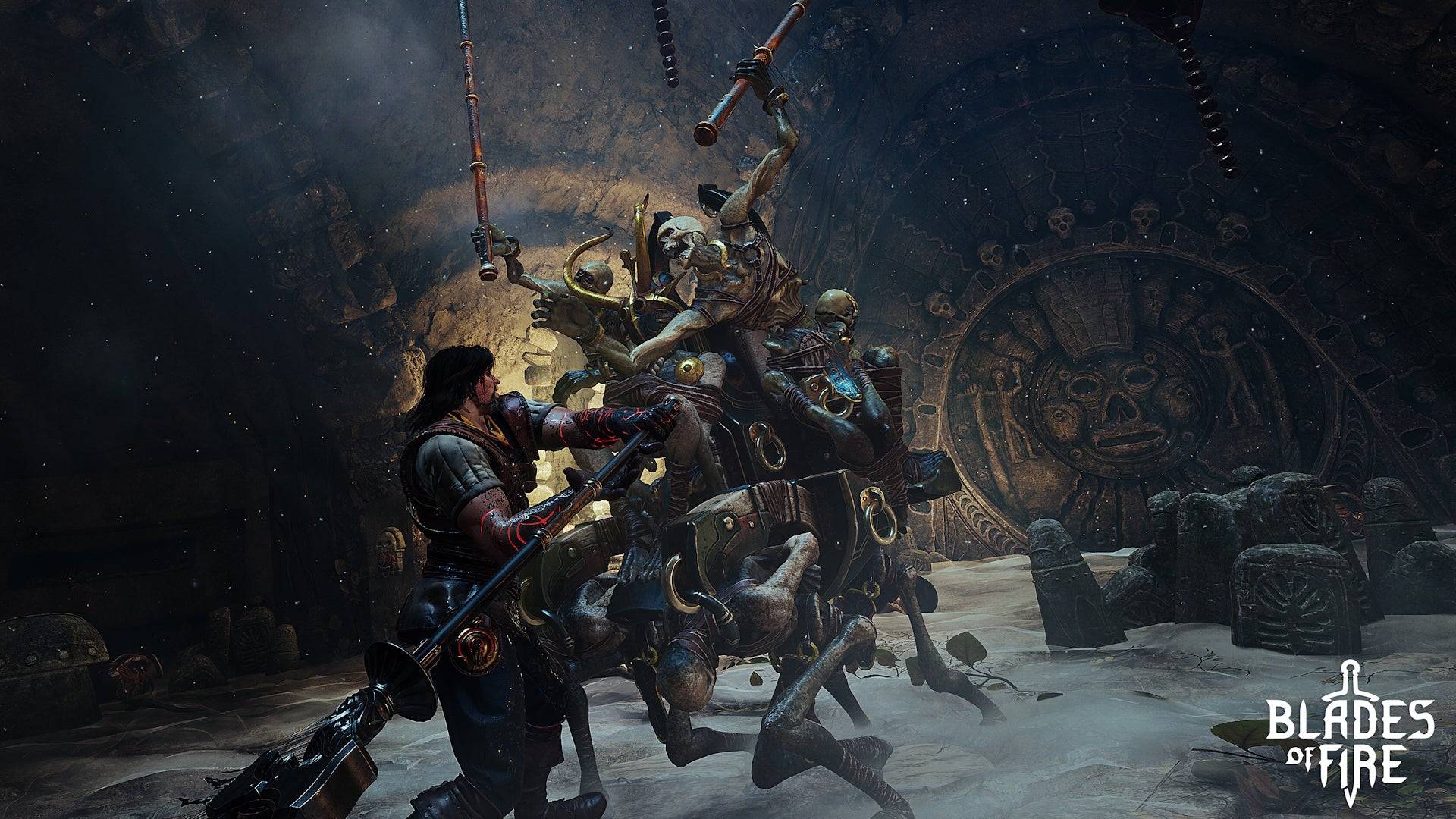
In the crowded landscape of modern action RPGs, the "Souls-like" label is often applied to anything that features a stamina bar, difficult boss encounters, and a bonfire-like save system. However, true innovation in this genre is rare. It takes courage to deviate from the established formulas that players have come to expect, and developers who dare to experiment with foundational mechanics deserve recognition. Blades of Fire, the latest action RPG from MercurySteam, is exactly that kind of experiment—a game that acknowledges its inspirations but spends its entire runtime trying to be something entirely its own.
Released on May 22, 2025, for PC, PlayStation 5, and Xbox Series X|S, Blades of Fire is a game that lives in its own world. While it wears its Souls-like DNA on its sleeve, it wraps those familiar mechanics in a unique combat system and weapon-durability loop that stands out in a market saturated with "mindless" clones. Here is our in-depth review.

Narrative: A Messy but Original Mythos
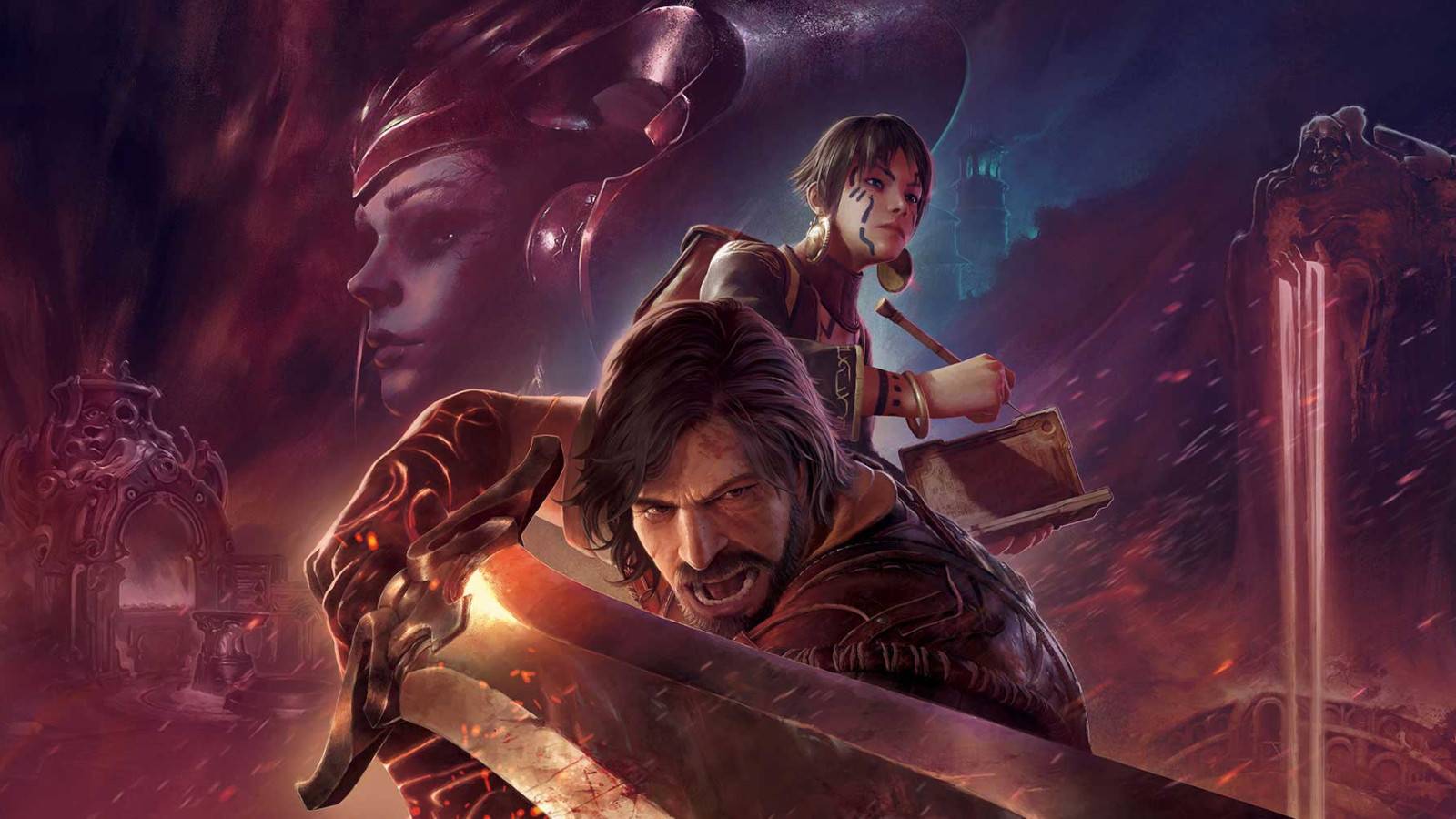
The story of Blades of Fire is ambitious, original, and—at times—frustratingly opaque. You play as Aran, a muscular, determined warrior on a quest for vengeance against a queen who wields dark magic to turn steel into stone. On his journey, he encounters a god-like entity that transports him to a parallel realm where the "internal forge" is perpetually burning.
The world-building is fascinating, yet the delivery can feel chaotic. The game utilizes complex, high-fantasy terminology that is often left unexplained, forcing players to connect the dots themselves. Fortunately, you are not entirely alone. Aran is accompanied by Adso, a companion who functions as a living encyclopedia. Whenever you are confused about an objective or the history of a region, you can consult Adso for guidance. While the storytelling is admittedly a bit messy, the central premise—a world where the very metal you fight with is under threat—is a captivating hook that kept me invested despite the initial confusion.
Gameplay: Everything Revolves Around the Blade
In Blades of Fire, the weapon is not just a tool; it is the center of the universe. The entire gameplay loop, from exploration to combat and even inventory management, revolves around the sacred forge and the preservation of your gear.
The Art of Forgery
Unlike most RPGs where you simply loot weapons from chests or defeated foes, you must actively participate in their creation. Scattered throughout the world are recipes and raw materials. When you approach an anvil to forge a weapon, you must select your materials and engage in a rhythm-based mini-game. The quality of your performance, combined with the rarity of your materials, determines the weapon's "star rating."
This star rating is critical because it dictates how many times you can repair that item. Combat wears your weapons down rapidly, and as they approach zero durability, their damage output drops significantly. Having a high-star weapon means longevity; having a low-star weapon means you are one tough fight away from being defenseless. It forces you to constantly weigh the value of your gear and makes every forging session feel like a high-stakes gamble.
The Souls-Like "Drop" Mechanic
The game borrows the concept of the "bonfire" (Anvils), where resting restores your health but respawns all nearby enemies. However, there is a brutal twist: when you die, you do not lose experience or currency—you drop the weapon you were wielding. If you fail to reach your point of death and retrieve your gear, that weapon is lost forever. In a world where a specific weapon might be the only thing capable of damaging a certain enemy type, losing a primary sword can be a run-ending catastrophe.
Combat: A Directional Revolution
The standout feature of Blades of Fire—the mechanic that truly deserves a medal—is the directional combat system. While many action RPGs rely on a single "attack" button, MercurySteam has introduced a system where every face button on your controller corresponds to a specific direction of attack:
- Square (Left): Left-side swipe.
- Circle (Right): Right-side swipe.
- X (Bottom): Low sweep.
- Triangle (Top): Overhead strike.
Every single one of these attacks can be charged for extra damage or timing adjustments. At first, this control scheme feels incredibly unnatural, especially if you have spent years playing Dark Souls or Elden Ring. Adapting to L1 as a dodge and L2 as a parry takes genuine effort. However, once the muscle memory clicks, the fluidity of the combat opens up in ways that traditional systems cannot replicate. You are no longer just managing stamina; you are actively engaging with the enemy’s guard direction, trying to find the opening that allows you to strike.
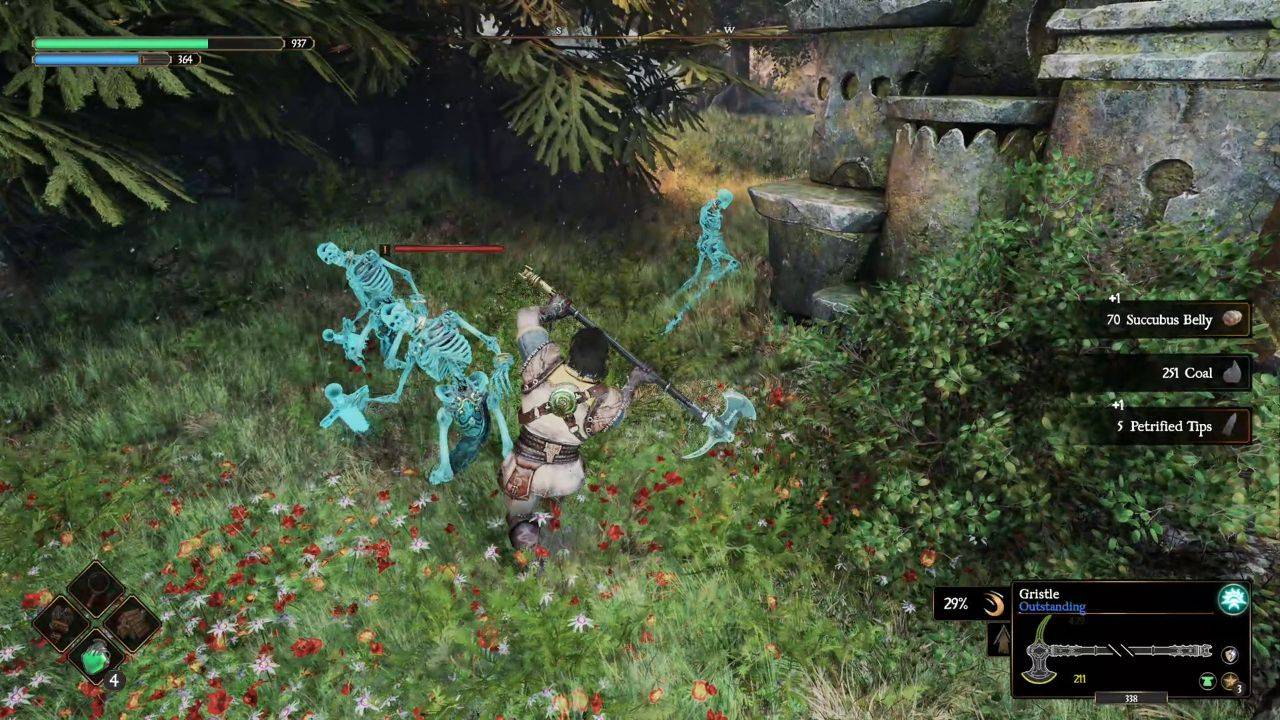
This system interacts perfectly with the enemy weaknesses. When you lock onto a target, they will glow:
- Red: Invulnerable to the current weapon type.
- Yellow: Resistant (minimum damage).
- Green: Vulnerable (optimal damage).
Exploration and Level Design
The game adopts a semi-open-world structure reminiscent of modern God of War titles. You unlock new regions, and upon discovering them, you obtain a map—but movement is often constrained. The level design is dense, packed with hidden puzzles, discovery markers, and deep-lore mysteries. If you are the type of player who loves "turning over every stone," you will find Blades of Fire incredibly rewarding.
However, the bosses were a slight disappointment. While they are undeniably challenging, they lack tactical variety. Most boss fights devolve into a predictable loop of: land two hits, dodge, retreat, and repeat. Given the depth of the directional combat system, it is a shame that the boss encounters don't force you to utilize your full suite of directional attacks more effectively.
Visuals and Technical Performance
Visually, Blades of Fire is a competent, if slightly generic, experience. It avoids being "ugly," but it rarely pushes the visual boundaries of the PlayStation 5. The medieval fantasy aesthetic is standard—you will see plenty of stone castles and damp dungeons—though the forge environments, with their glowing molten metal and complex particle effects, look quite impressive.
On the technical front, the game is remarkably stable. Running at a locked 60 FPS, the performance is flawless. It is refreshing to play a title that prioritizes smooth performance over graphical bells and whistles that might stutter during intense combat.
| Category | Verdict |
|---|---|
| Combat System | Genius; directional inputs offer unparalleled fluidity. |
| Weapon Management | Innovative; the forging loop is a highlight. |
| Exploration | Satisfying semi-open level design with many secrets. |
| Narrative | Ambitious but hampered by confusing terminology. |
The Final Verdict
Blades of Fire is a game that is unafraid to be difficult, both in its gameplay and in its design philosophy. It follows its own rules, successfully separating itself from the "mindless" copy-paste Souls-like titles that dominate the market. The directional combat system, paired with the ingenious weapon-durability management, makes for a gameplay experience that is consistently engaging and deeply unique.
While players may need to push through a steep learning curve regarding the controls and navigate a messy narrative, the payoff is a satisfying, high-skill RPG that feels like a genuine breath of fresh air. If you are a fan of action RPGs and are looking for something that demands mastery while offering mechanics you haven't seen before, Blades of Fire is well worth your time.