MEGA MAN STAR FORCE LEGACY COLLECTION: NOSTALGIA PACKAGED, AGE EXPOSED
Mega Man Star Force Legacy Collection Review: A Nostalgic Trip Weighed Down by DS-Era Baggage
When Capcom announced the Mega Man Star Force Legacy Collection, the reaction from the gaming community was split. For a dedicated, vocal niche, it was the long-awaited return of a beloved childhood staple. For the rest of the gaming world—many of whom may never have touched the original Nintendo DS releases—it was a deep cut from Capcom's archives. Released on March 27, 2026, across modern platforms, this collection aims to rescue a largely forgotten trilogy from obscurity and present it to a brand-new generation.
But does this trilogy truly deserve its modern resurrection? Capcom’s effort to preserve its history is commendable, dragging these titles back into the light and making them highly accessible. However, offering games heavily rooted in mid-2000s portable design philosophies to a modern audience is a risky gamble. While the nostalgic charm is undeniable, whether new players will find joy in these archaic mechanics is highly questionable. Here is our comprehensive review of the Mega Man Star Force Legacy Collection.
Story and Narrative: A Heartfelt Beginning, Stagnant Sequels
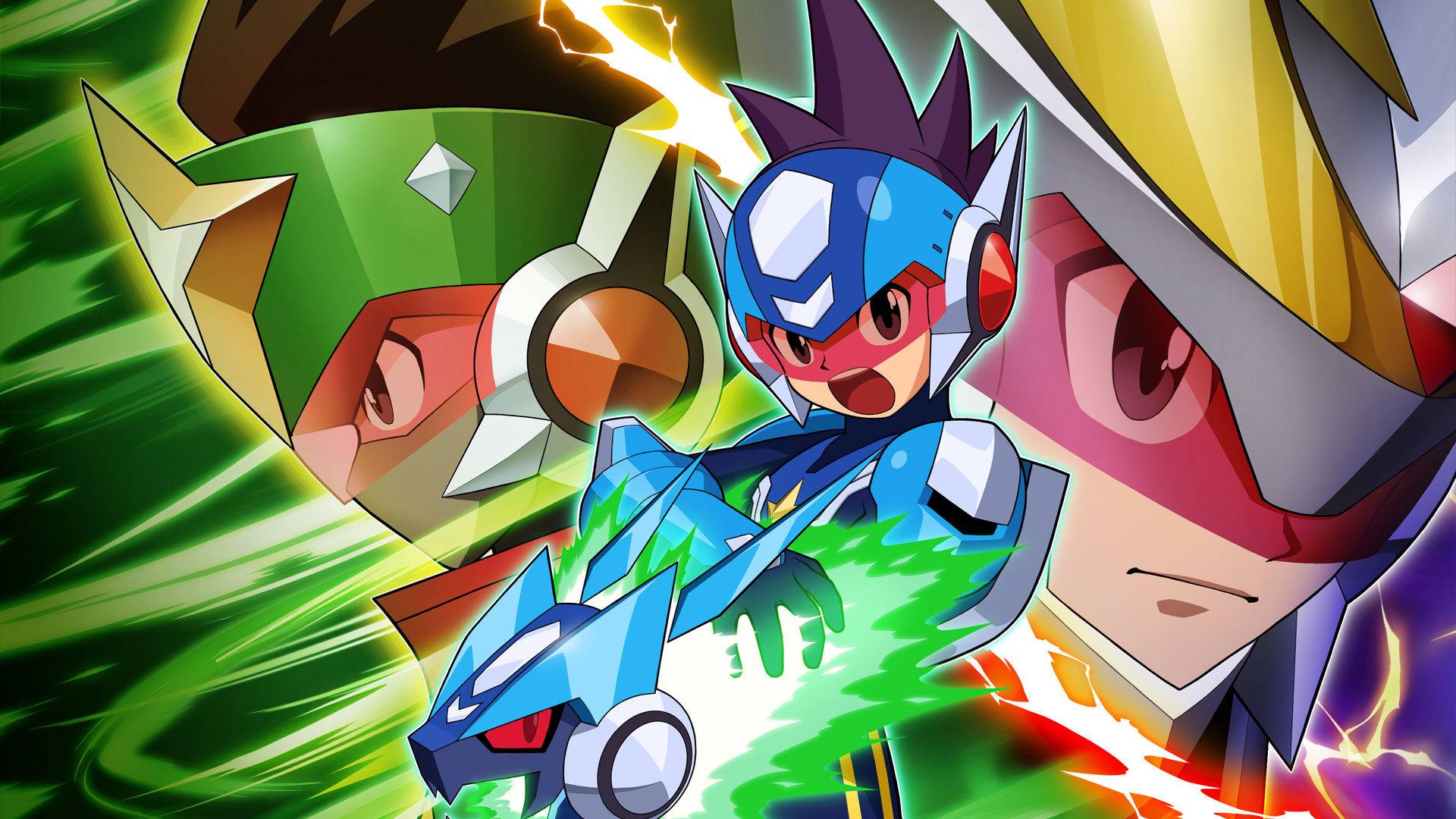
Set roughly two hundred years after the events of the iconic Battle Network series, Star Force abandons the internet-based NetNavis in favor of a world built entirely on "Wave technology"—a highly advanced communication network that has become the absolute backbone of society.
The first game introduces us to Geo Stelar, an eleven-year-old boy deeply entrenched in grief following the mysterious disappearance of his astronaut father. Geo has withdrawn from the world, refusing to attend school and pushing away potential friends. His life changes during a late-night visit to a local observatory when his Transer device intercepts a signal from deep space. He bonds with Omega-Xis, a gruff alien FM-ian with a troubled past. Together, they fuse to become Mega Man, the defender of the Wave World.
The Emotional Core
The narrative premise is surprisingly charming. The emotional core of the first game—revolving heavily around themes of loneliness, the necessity of friendship, and the heavy burden of loss—is handled with a genuine maturity rarely seen in titles aimed at younger demographics. Geo is a sensitive, reluctant protagonist. His hesitations and emotional walls give the story a quieter, more melancholic tone that sets it apart from traditional shōnen action tropes.
The Sequel Slump
Unfortunately, the narrative progression halts entirely after the first entry. While the second and third games successfully expand the world's lore and introduce flashy new threats and transformations, the core storytelling refuses to evolve. Geo's character development stagnates, and the overarching plots of Star Force 2 and Star Force 3 feel entirely serviceable rather than genuinely engaging. They get the job done, but they lack the emotional resonance that made the original game so memorable.
Gameplay: Card-Based Combat Meets Action RPG
If you are unfamiliar with the Star Force lineage, the gameplay might take some getting used to. These are action RPGs fundamentally built around a card-based combat system inherited from the Battle Network games.
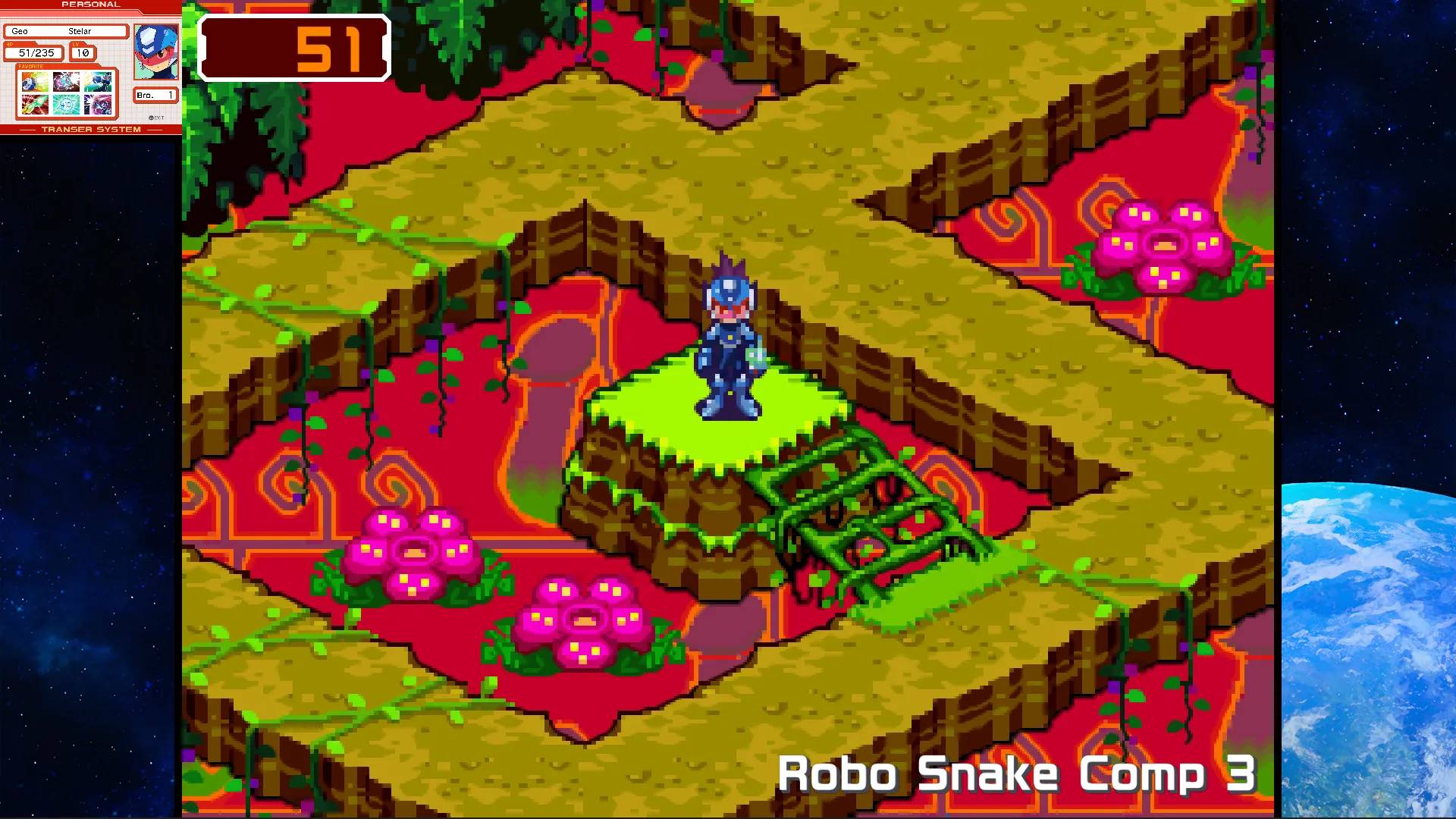
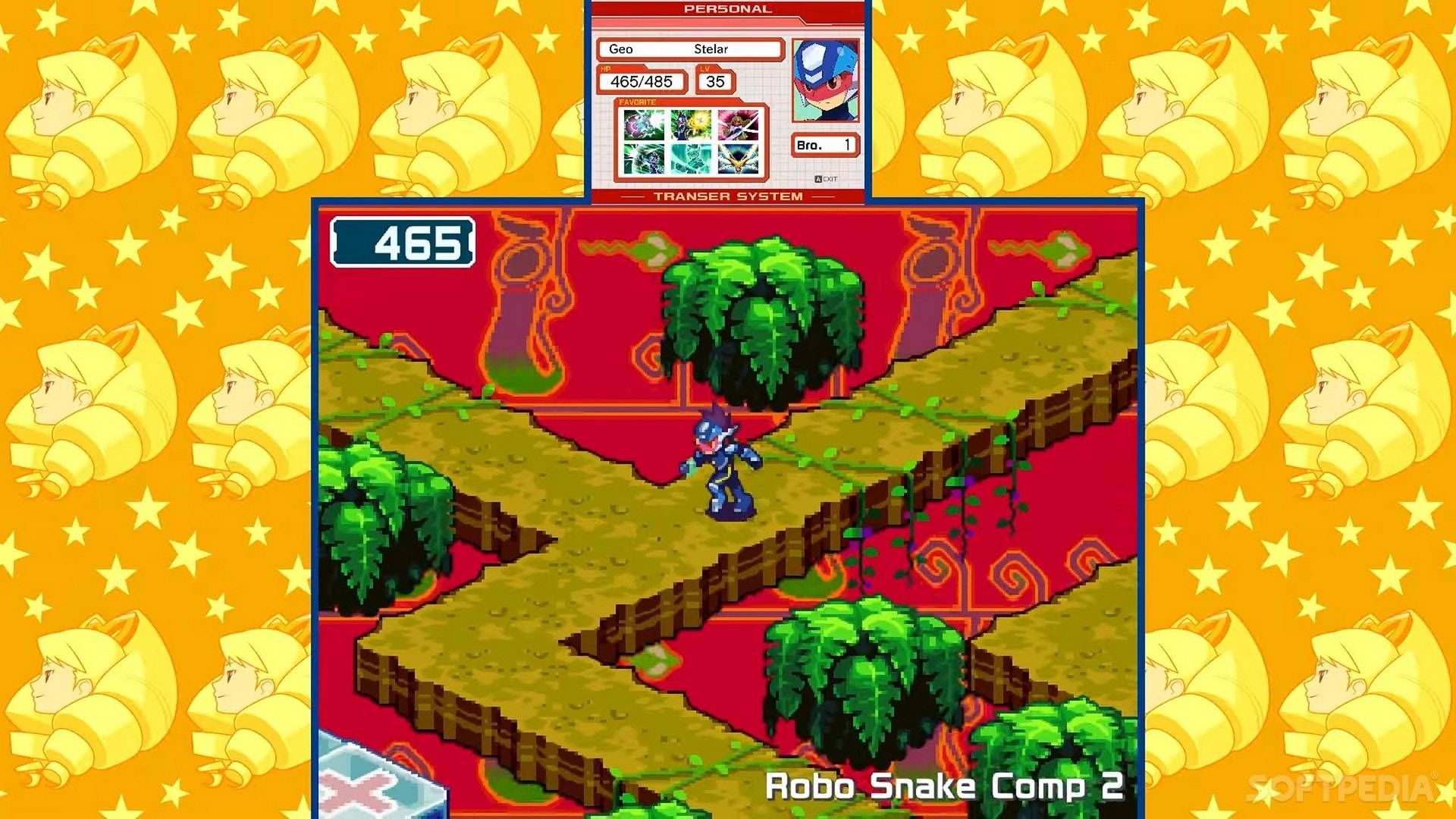
The core gameplay loop is divided into two distinct phases: exploration and combat. You explore isometric overworlds, converse with NPCs, and trigger random encounters. When a battle initiates, the perspective shifts behind Mega Man on a compact three-panel grid, while enemies occupy a larger grid in front of you.
The Folder System
Combat plays out in real-time. During battle, a custom gauge slowly fills. When it tops out, time pauses, allowing you to draw a hand of Battle Cards from your "Folder" (the game's terminology for your customized deck). Matching cards by specific columns or names allows you to chain devastating combo attacks before returning to the live-action phase, where you must actively dodge incoming enemy fire while waiting for the gauge to refill.
Folder-building is the absolute heart of the Star Force experience, and it holds up remarkably well today. Assembling a deck with effective elemental synergies, balancing heavy offensive firepower with necessary defensive counters, and constantly adapting your loadout to exploit the weaknesses of different enemy types gives the combat incredible strategic depth.
As you progress, the inclusion of elemental transformations adds further mechanical flair, and late-game boss encounters demand incredibly careful tactical thinking. The combat is undeniably contagious—at least for a while.
The Burden of DS-Era Game Design
The major problems plaguing the Mega Man Star Force Legacy Collection are not found in its combat, but rather in its structural DNA. These games are a product of their time, and the mid-2000s portable design philosophies have not aged gracefully.
- Vague Objectives: The games frequently fail to tell you exactly where to go or what to do next, leading to frustrating, aimless wandering across the isometric maps.
- High Encounter Rates: Random encounters stack up at an alarming pace. What starts as a fun distraction quickly devolves into a tedious chore that halts your exploration progress every few steps.
- Asset Recycling: The three games share a massive amount of enemy types, sprites, and environmental templates. By the time you reach the third entry, the sense of novelty is completely exhausted.
Quality-of-Life (QoL) Rescues the Experience
Capcom clearly recognized these structural flaws and introduced a suite of modern Quality-of-Life options that essentially save the collection from being unplayable by today's standards. Players now have access to:
- Adjustable Encounter Rates: Tone down the random battles to focus on exploration and story.
- Boosted Zenny Drops: Reduces the agonizing grind for in-game currency.
- Auto-Save Functionality: A godsend for modern players used to frictionless checkpoints.
- Navi Locator: Marks optional boss locations directly in the game world, eliminating the need to scour ancient online forums for guides.
These additions smooth out the rough edges significantly, even if they cannot entirely mask the inherent pacing issues of the original code.
Visuals, Audio, and Modern Performance
Transitioning a dual-screen Nintendo DS game to a single, high-definition television or monitor is never an easy task, but Capcom presents the games cleanly. The user interface has been expertly reorganized to accommodate a single-screen layout without feeling cluttered.
Graphically, however, do not expect a massive overhaul. Aside from crisp resolution upscaling, the in-game assets remain largely untouched. The original pixel art holds its charm, but the optional HD smoothing filter is a matter of subjective taste (we highly recommend sticking to the classic pixel visuals). Where the visuals truly shine is in the menus and dialogue boxes; the newly redrawn HD character portraits and card illustrations look incredibly sharp.
An Audio Masterpiece
The audio package is undoubtedly the collection's greatest highlight. Players are given the freedom to toggle seamlessly between the original, compressed DS soundtracks and brand-new, fully arranged versions of every single track. The arranged music is phenomenal, respecting the original compositions while elevating them with modern instrumentation. Capcom also included full voice acting for major story beats. While the inclusion of voice acting is a nice modern touch, the quality of the performances is highly questionable, often bordering on cheesy Saturday-morning cartoon territory.
| Feature | Details |
|---|---|
| Developer & Publisher | Capcom |
| Release Date | March 27, 2026 |
| Platforms | PC, PS4, PS5, Xbox One, Xbox Series X|S, Switch |
| Price | $39.99 USD |
| Key QoL Upgrades | Encounter sliders, Auto-save, HD Portraits, Arranged OST |
The Multiplayer Conundrum
Multiplayer network battles have always been a staple of the Mega Man RPG spin-offs, and they return here. You can queue for online matchmaking across all three games simultaneously directly from the main menu.
However, there is a massive catch: there is no cross-platform play. In a niche retro collection like this, segmenting the player base across PC, PlayStation, Xbox, and Switch is a fatal blow to the online ecosystem. Finding matches is going to become incredibly difficult as the player base naturally thins out just weeks after launch. If you are buying this solely for competitive deck-building action against strangers, you may be left waiting in empty lobbies.
Final Verdict: Is It Worth Your $39.99?
The Mega Man Star Force Legacy Collection is a lovingly assembled preservation package of a trilogy that time has treated quite unevenly. The grid-and-card-based combat system still holds up to modern scrutiny, providing genuine tactical depth. Geo Stelar’s emotional journey in the first title carries a quiet, resonant weight, and Capcom’s brilliant Quality-of-Life additions make the games more approachable than they have ever been.
For longtime fans who remember these games fondly, the $39.99 price tag is an easy recommendation. It is the definitive way to experience this specific era of Mega Man history.
For everyone else, caution is advised. The DS-era design sensibilities—complete with repetitive environmental structure, asset recycling, and sluggish narrative pacing in the sequels—will likely be a dealbreaker for modern audiences lacking the lens of nostalgia. It is not a rediscovered masterpiece; it is a highly imperfect trilogy given the best possible home. Whether that is enough depends entirely on how much patience you are willing to offer it.
Score: 7.0 / 10