RESIDENT EVIL RESISTANCE BETA: A CLUNKY SHUFFLE THROUGH A PROMISING FUNNEL
Resident Evil Resistance: A Conceptually Intriguing but Flawed Asymmetric Spin-Off
The asymmetric multiplayer genre has seen a massive surge in popularity over the last few years, dominated by heavyweights that pit a team of vulnerable survivors against an overpowered, singular threat. When Capcom announced Resident Evil Resistance—a 4v1 third-person survival horror experience—the elevator pitch was undeniably strong. Offering fans of the recent, critically acclaimed remakes a chance to indulge in a multiplayer cat-and-mouse game within the iconic Resident Evil universe seemed like a surefire recipe for success.
As a concept, Resistance is hard to fault. The premise tasks a squad of four diverse survivors with escaping a labyrinthine facility under the intense pressure of a ticking clock. Standing in their way is a solo "Mastermind" player, watching through security cameras, setting deadly traps, and unleashing iconic bioweapons to thwart the escape. It promises agency, a clear set of objective-based puzzles, and class-specific abilities, all wrapped in the beautifully polished graphical finish of Capcom’s RE Engine.
Unfortunately, judging by the core mechanics and our time with the game, this spin-off wildly misses the mark. It does not take long for the goodwill of a solid premise to erode, leaving behind an unbalanced, chaotic mess of a multiplayer mode. Ultimately, Resident Evil Resistance should be counting its lucky stars that it was bundled with the Resident Evil 3 Remake rather than being sold as a standalone premium title.
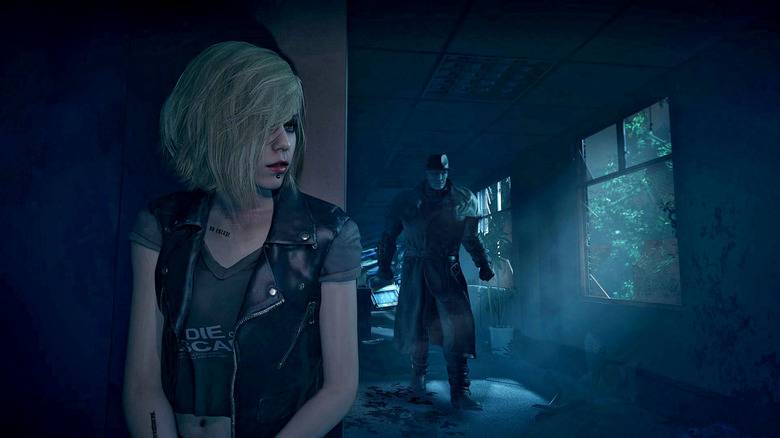
The Mastermind Mechanic: The Death of Survival Horror Tension
The fundamental issues with the game's meta-design present themselves almost immediately upon loading into a match. The Mastermind player is equipped with a deck of cards representing various enemy types, traps, and buffs. Each card has an associated energy cost, and the Mastermind spends this energy to populate the map in real-time.
In theory, this should make for a highly strategic game of chess. In practice, it devolves into a frustrating spam-fest. The Mastermind is able to drop creatures and traps directly in front of the survivors out of thin air, in almost any location with a camera feed.
Not only does this completely eviscerate any possible feeling of organic tension for the opposing team, but it turns currently occupied rooms into a never-ending factory assembly line of creatures. Survival horror thrives on anticipation—the dread of what might be lurking around the next corner or behind a closed door. Resistance abandons this philosophy entirely. When a zombie can beam into existence two feet in front of you with reckless abandon, the fear of the unknown is replaced by the sheer annoyance of dealing with a constant, artificial roadblock.
Consequently, playing as a survivor feels more like a tedious chore than a taut test of endurance. The gameplay loop quickly devolves into a slog through relentless waves of disposable bad guys, ending only when your team manages to fumble its way to unlocking the next safe zone.
Map Design and the Restrictive Environment
A multiplayer game of this nature relies heavily on its level design to provide balanced opportunities for both the predator and the prey. In Resident Evil Resistance, the environments feel far too claustrophobic and restrictive for the mechanics at play.
The maps are comprised of impossibly tight corridors and small rooms. If the level design offered more alternative paths, verticality, or opportunities for stealth and tactical retreats, the overwhelming ratio of scares to direct confrontation might have been mitigated. Instead, survivors are frequently forced into chokepoints where the Mastermind can easily stack traps, lock doors, and spawn a horde of the undead.
The Machine Gun Camera Problem
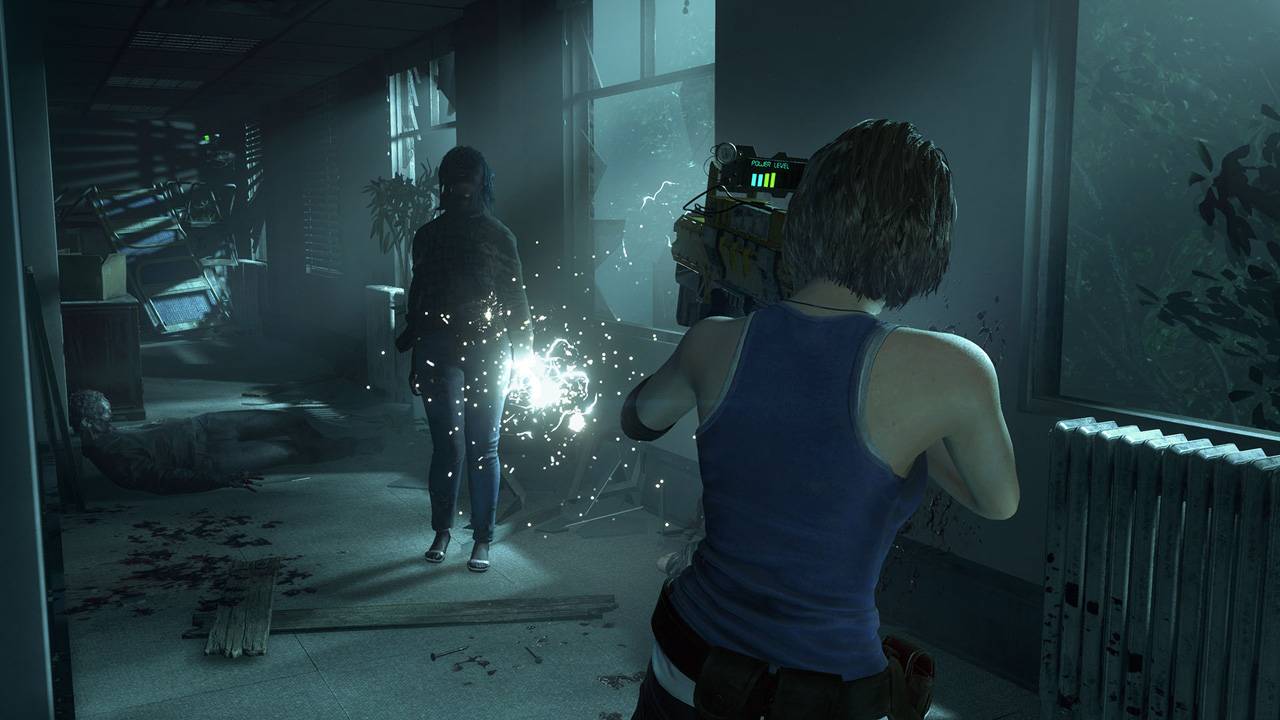
Compounding the frustration of the restrictive map design are the machine gun cameras. The Mastermind can mount firearms onto the security cameras and take direct aim at the survivors. These guns can be activated at a moment's notice and are capable of shredding a player's health bar in seconds.
This mechanic leads to a time-burning respawn cycle and forces survivors to waste precious ammunition shooting at ceiling cameras rather than engaging with the classic survival horror elements. It disrupts the pacing, feels wildly out of place in a game fundamentally about surviving bioweapons, and adds another layer of unavoidable misery to the survivor experience.

The Bioweapon Dilemma: Mr. X and Unavoidable Misery
If the constant stream of spawned zombies and turret fire isn't enough to put you off, the endgame phase of a match certainly will. As a match progresses, the Mastermind gains the ability to summon and directly control an "Ultimate" bioweapon—the most notorious of which is the terrifying Tyrant, Mr. X.
In the single-player campaign of Resident Evil 2, Mr. X is a masterpiece of game design. His heavy, echoing footsteps create a pervasive sense of dread, forcing you to alter your routes and play stealthily. In Resistance, he is simply an obscenely overpowered griefing tool.
When the Mastermind takes control of Mr. X, they can trap survivors in the game’s inherently cramped quarters. Because the movement mechanics do not feature the fluid dodge mechanics of an action game, being cornered by Mr. X in a 5x5 room leaves you with absolutely no viable defense. It strips the agency away from the survivor team, turning what should be a thrilling climax into a hopeless, frustrating beatdown.
The Few Saving Graces
Despite its glaring structural flaws, there are some saving graces that help rescue what is, on balance, a sloppy effort. It is clear that the developers had access to phenomenal tools, even if the execution of the multiplayer ruleset faltered.
- The RE Engine's Polish: The game looks fantastic. The lighting, character models, and gore effects leverage the phenomenal power of Capcom's proprietary engine, matching the visual fidelity of the mainline remakes.
- Familiar Controls: The control scheme inherits its logical, weighty rethink from the Resident Evil 2 and Resident Evil 3 remakes. The over-the-shoulder shooting, inventory management, and movement feel hefty and satisfying, ensuring a minimal transition period for players coming straight from the single-player campaigns.
- Direct Enemy Control: For the Mastermind, taking direct control of standard enemy units (like a regular zombie or a Licker) is infinitely more interesting than simply playing cards from a menu. It works in much the same way as Left 4 Dead’s implementation of the mechanic, allowing you to ambush players manually and execute satisfying grabs.
- Matchmaking Stability: During our testing phases, particularly on the Xbox One, it was extremely easy to get into a match. The matchmaking algorithms were snappy and functional, moving players from the lobby to the game relatively painlessly.
How Resident Evil Resistance Could Have Been Fixed
It is difficult not to look at Resident Evil Resistance and imagine what could have been. The ingredients for a phenomenal multiplayer survival horror game are all here, but the recipe was mixed poorly.
We would almost prefer the chaotic "card-spawning" element to be stripped away entirely. If the levels were blown wide open into larger, interconnected atmospheric zones—such as an entire abandoned hospital wing or a sprawling Raccoon City street block—the game could have embraced an almost Friday the 13th: The Game vibe.
Imagine a mode where the map is pre-populated with enemies, and the Mastermind player takes direct, permanent control of a relentless stalker like Mr. X or Nemesis. The asymmetric concept would be perfectly preserved, the franchise's staple tension would be fully restored, and the pervasive feeling of cheap, artificial difficulty would be eliminated. Players could focus on actual survival, hiding, and puzzle-solving, rather than shooting cameras and battling zombies that materialize out of thin air.
| Feature | Our Verdict |
|---|---|
| Concept & Premise | Strong on paper, appealing 4v1 asymmetric setup. |
| Gameplay Balance | Heavily skewed; spawning mechanics destroy organic tension. |
| Map Design | Too restrictive and cramped, leading to frustrating chokepoints. |
| Controls & Visuals | Excellent; leverages the brilliant RE Engine perfectly. |
The Final Verdict
Ultimately, what we are left with is a multiplayer mode that is sorely lacking in almost every competitive design regard. Resident Evil Resistance sacrifices the slow-burn dread and meticulous pacing that revitalized the franchise, trading it for a chaotic, spam-heavy arcade shooter that fails to satisfy either side of the asymmetric coin.
While the slick controls and beautiful RE Engine graphics offer a brief distraction, the core gameplay loop is an exercise in frustration. It is immediately forgettable, fundamentally unbalanced, and in its current form, a painfully squandered opportunity by Capcom.