PIXELSHIRE: THE CHARMING CANVAS MARRED BY TECHNICAL GLITCHES
Pixelshire: A Charming Cozy Farm Sim Trapped in a Web of Bugs
There has been no shortage of phenomenal AAA blockbusters over the last few years, but some of the most memorable gaming experiences still emerge from the passion of tiny indie studios. Titles like Ghost of a Tale stand as beautiful testaments to the incredible vision and execution a solo developer can achieve. You simply have to give credit where credit is due when a single creator pulls off something magical. Unfortunately, after spending over 15 hours washing ashore in the vibrant, pixelated world of Pixelshire, I cannot say that the same magic has successfully materialized here.
First announced back on June 7, 2022, Pixelshire—developed by Kappa Bits and published by Merge Games—officially launched on PC on May 8, 2025 (with PlayStation 5 and Nintendo Switch ports slated for later this year). Billed as a 2D top-down farm life sim blended with town-building, terraforming, exploration, and light combat mechanics, it certainly swings for the fences. Yet, beneath its undeniably cozy and colorful surface lies a tangled foundation of frustrating bugs, unpolished UI, and missed potential that makes it incredibly hard to recommend in its current state.
The Stardew Valley Elephant in the Room
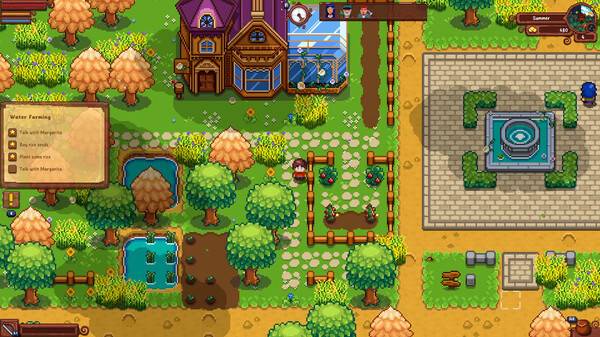
Before diving into the core mechanics, we need to address the inevitable comparisons. A quick glance at online reactions leading up to the release—especially the comments section under recent gameplay videos—reveals a fierce wave of cultural gatekeeping. Yes, the overall look, feel, and premise of Pixelshire instantly scream Stardew Valley (which itself was heavily inspired by the classic Harvest Moon franchise). Coincidentally, both Stardew Valley and Pixelshire are the ambitious products of solo developers.
However, a "solo-dev" backstory only stretches so far when evaluating a commercial product. While I acknowledge the blatant visual and thematic similarities, I prefer to steer clear of the toxic discourse surrounding "clones." No single video game needs to keep a chokehold on an entire genre. Pixelshire deserves to be judged on its own unique merits and execution—and unfortunately, that execution is exactly where things begin to fall apart.
Narrative and Community: A Shipwrecked Start
For a life simulation game to transcend being just another mindless daily grind, the story and the characters need to be engaging enough to keep players emotionally invested. This is the first major hurdle where Pixelshire stumbles.
The game kicks off with a familiar, dramatic narrative setup: your homeland was ravaged by a brutal war, and rampant greed drove its people away. Seeking a better life, you set sail across the ocean, only to suffer a devastating shipwreck and wash ashore on the idyllic beaches of Pixelshire with no memory of who you are. It is a solid, albeit cliché, foundation for a fresh start.
As you establish your footing, you are introduced to the local inhabitants. You will meet Captain Farell, a rugged pirate-turned-fisherman; Eva, the welcoming town mayor; and Valerie, a fierce warrior. As your settlement slowly expands, new faces like Iowa the farmer and Nobeko the archaeologist will join your ranks. The game even advertises relationship-building, romance options, and the ability to have these NPCs accompany you on quests and daily tasks.
While the premise is perfectly fine, the actual execution of these characters is disappointingly thin. The residents of Pixelshire feel entirely transactional. Instead of coming across as living, breathing neighbors with distinct personalities and deep backstories, they function merely as static quest dispensers and automated shopkeepers. For a game that heavily markets community building, the lack of narrative depth is a massive misstep. The overarching story plays it far too safe, never giving you a compelling reason to truly care about the town you are trying to rebuild.
Gameplay Loop: A Slow, Bland Grind
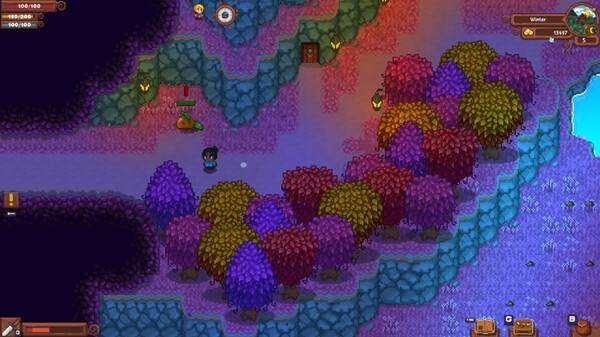
Mechanically, Pixelshire adheres strictly to the standard farming sim blueprint. Movement is mapped to WASD, interacting is done with the E key, and your inventory is easily accessed with B. Managing your hotbar requires a somewhat clunky combination of right-clicking to equip items to your tool menu and using the Q key for quick access.
Progression is structured around unlocking blueprints and earning experience points (XP) through daily tasks. The game features a surprisingly wide array of talent trees, spreading your XP across:
- Farming & Woodworking
- Mining & Combat
- Cooking, Fishing, & Brewing
- Magic
At its core, Pixelshire wants to be a farm life sim with a heavy emphasis on granular town customization. You are eventually tasked with placing homes and designing the layout of the village for your newly arrived citizens. However, the pacing of the progression system is punishingly slow. By the time I finally unlocked the ability to meaningfully customize my town and place structures where I wanted, the tedious, repetitive grind had already caused massive burnout. The journey to the fun parts of the game simply feels like a slog.
Terraforming: A Half-Baked Differentiator
One of the major selling points that was supposed to set Pixelshire apart from its peers is its terraforming system, highly reminiscent of the later stages of Animal Crossing: New Horizons. The game allows you to actively reshape the landscape to fit your aesthetic desires.
In practice, you can raise the land by one level to create small hills, or dig down by two levels, primarily to carve out rivers or make room for sunken agricultural fields. On paper, this is a mechanic with massive creative potential. In reality, it currently feels half-formed and rigid. The limitations on how high or low you can sculpt the earth, combined with clunky targeting controls, strip away the joy of creativity. Instead of feeling like a god shaping a new world, you feel like a frustrated landscaper fighting against arbitrary restrictions.
Bugs and UI: A Technical Nightmare
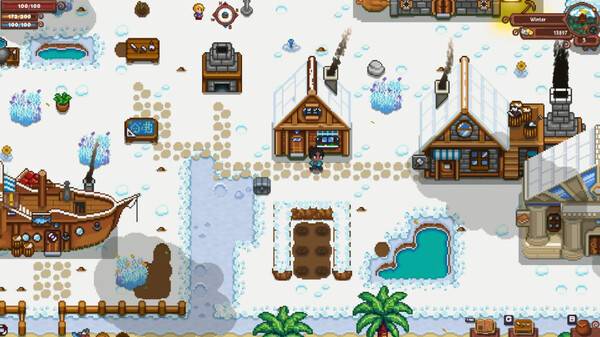
A little bit of digging reveals that Pixelshire has been in active development since 2020, if not earlier. Yet, beneath its charming, pixel-art surface lies a technical foundation that is fundamentally unstable. While players are generally willing to overlook an occasional bug in an ambitious indie title, the sheer volume and frequency of glitches here are impossible to ignore.
The User Interface (UI) requires a massive overhaul. One of the first "why are you like this?" moments occurred while simply trying to sell items to an NPC—an action you perform hundreds of times. After confirming a sale, the item count in your shop inventory correctly drops to zero. However, the item icon itself refuses to disappear from the screen. You are forced to manually switch inventory tabs back and forth just to force the UI to refresh and clear the ghost items. Even more frustrating is the inability to deselect a single item; if you accidentally click the wrong crop, you have to cancel the entire transaction and start from scratch.
The Phantom Menus and Intangible Fences
The technical woes do not stop at the shops. Every single time I opened the Talents tab to check my progression, a random talent perk bubble would inexplicably pop up and block the screen, even if my cursor was nowhere near it.
Then there is the issue of basic farm management. What is the point of spending hard-earned resources crafting and placing wooden fences to corral your livestock, when your chickens, cows, and even the local NPCs just casually walk straight through them as if they don't exist?
Broken Blacksmiths and Flawed Upgrades
Aside from the game's frequent inability to accurately predict and register player inputs, my biggest grievance lies with the tool upgrade and repair systems. There is a dedicated slot at the local blacksmith where you are supposed to place a damaged tool to repair it. The problem? It simply does not work. The button does nothing.
Tool upgrades are equally baffling. Through some bizarre coding logic, a single basic wooden sword can be consumed multiple times to craft several copper swords. Yet, when you attempt to upgrade that copper sword to an iron one, the system works as intended, consuming the lower-tier weapon entirely. To make matters worse, when you finally equip these newly crafted, higher-tier items to your quick-access menu, the HUD icons do not update. You are left staring at a wooden sword icon, having absolutely no idea what material you are actually holding until you unequip it.
These are not minor inconveniences; they are core gameplay loops that are fundamentally broken. This is not the kind of "charming mess" you can easily forgive in a $20 Early Access title. This is a full, 1.0 release, and it is unacceptable.
Final Thoughts: A Cozy Facade Over Missed Potential
There is nothing easy or enjoyable about writing a negative review. I have absolutely no doubt that a tremendous amount of real passion, time, and effort went into the creation of Pixelshire over the last five years. However, it is equally true that a full-price, official release needs to deliver a baseline level of polish and functionality that is simply not present here.
If there is a uniquely special, heartwarming experience hidden deep within the code of Pixelshire, I could not find it in my 15 hours of playtime, and I cannot see myself returning to Arcadia to keep looking. Perhaps the game desperately needed another year of development, or perhaps it should have been launched under the Early Access banner to properly utilize community feedback and QA testing.
As it stands today, Pixelshire is a game that promised to bring something different and unique to the cozy life simulation genre, but ultimately under-delivered on almost every front. If you are looking for a relaxing farming getaway on your PC, you are better off booking a ticket back to Pelican Town until these bugs are thoroughly squashed.