KINGDOM COME: DELIVERANCE II – REFORGING THE SOUL OF BOHEMIA IN LEGACY OF THE FORGE
Kingdom Come: Deliverance II: Legacy of the Forge DLC Review – A Humble, Flawed Homecoming
There is a unique, irreplaceable charm to the way Warhorse Studios builds games. The original Kingdom Come: Deliverance won over millions of RPG enthusiasts not by mimicking the high-fantasy tropes of its contemporaries, but by anchoring itself in the gritty, uncompromising reality of 15th-century Bohemia. It was a world where you had to learn how to read, where your armor got dirty, and where a single poorly timed sword swing could send you to an early grave.
When Kingdom Come: Deliverance II launched in early 2025, it expanded Henry's horizons into the massive, bustling city of Kuttenberg. Yet, despite the grand political conspiracies and civil war dynamics, Henry’s heart has always belonged to the forge. Released on September 9, 2025, Legacy of the Forge is the second of three planned story expansions, dragging our silver-tongued hero back to his roots to honor the blacksmithing legacy of his adoptive father, Martin. At $13.99, it promises an intimate management simulation wrapped in classic historical immersion—but does it stick the landing, or does it leave too many irons in the fire?
The Narrative: Tracing Martin's Hidden Past
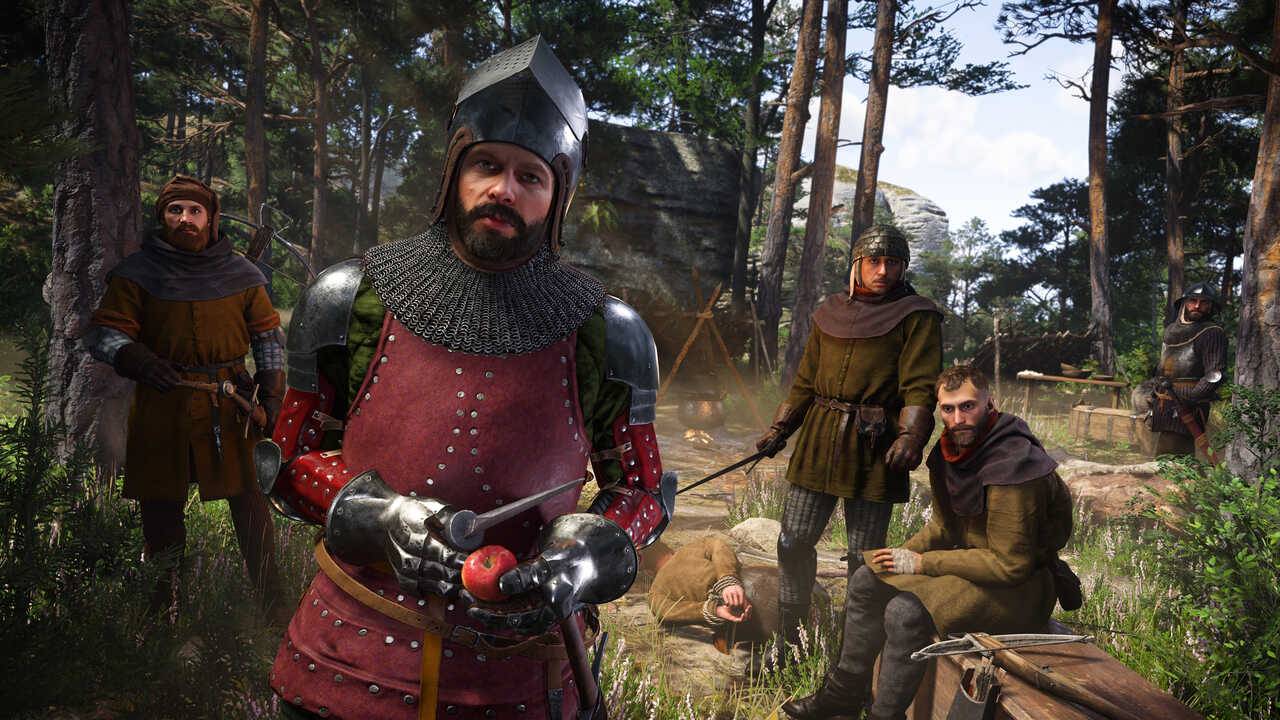
The core premise of Legacy of the Forge is beautifully personal. Instead of sending Henry off to fight a rogue band of mercenaries, the DLC focuses on a ruined, burnt-down forge located in the eastern quarters of Kuttenberg. This isn't just any derelict building; it is the very place where Henry's father spent his youth as an apprentice before fleeing the city after a mysterious quarrel.
Your objective is straightforward: join the local Blacksmiths’ Guild, pass their traditional trials, reclaim the rubble of your father's old workplace, and rebuild it from the ground up. There is a quiet, profound thrill in standing amidst the charred timber and thinking, "Right. Let’s fix this mess." It provides Henry with a physical stake in Kuttenberg, a slice of the medieval world that he can truly call his own.
The expansion also weaves in a secondary narrative involving the restoration of a complex astronomical clock, which triggers poignant memories of Henry's upbringing. The historical flavor is immaculate, complete with period-appropriate dialogue regarding medieval medical beliefs and a handful of nostalgic nods to Henry's infamous antics at the Sasau Monastery from the first game.
The Dialogue Dissolve
Unfortunately, the narrative elements suffer from a distinct lack of reactivity, especially if you tackle this DLC during the late-game or post-campaign phase. Legendary companions like Sir Hans Capon, Father Godwin, and Jan Žižka act as if absolutely nothing has changed. They offer zero unique commentary on Henry becoming a recognized guild master or establishing a massive manufacturing hub in the city.
Furthermore, for fans of the romance subplots, the perennially beloved Theresa is completely absent from the narrative yet again. If integrated organically into a fresh, mid-game playthrough, the pacing hits much better. However, as an endgame expansion, the lack of conversational depth makes the story feel like an isolated afterthought rather than a seamless continuation of Henry's life.
Gameplay & Mechanics: The Art of Blacksmith Prestige
Mechanically, Legacy of the Forge operates like a micro-scale version of the *From the Ashes* DLC from the original game. You aren't managing an entire village this time; instead, your focus is entirely on three upgradeable zones: the workshop, your private living chambers, and the courtyard yard.
Earning Your Respect
The most clever mechanical addition is the introduction of Blacksmith Prestige. In the base game, raw wealth (Groschen) solves almost every problem. In this DLC, money will buy your raw building upgrades, but it is your prestige rating that dictates *when* those improvements actually unlock. You earn prestige by interacting with the community:
- Fulfilling intricate weapon and tool commissions for demanding citizens.
- Engaging in formal blacksmith duels to prove your physical prowess.
- Participating in local archery contests and high-stakes dice games in the taverns.
- Completing dedicated guild story missions and making donations to the local church.
Customizing your forge is oddly satisfying, and Warhorse went the extra mile by tying mechanical benefits to your cosmetic choices. Upgrading your private bed improves your sleep quality metrics, while specific workshop decorations grant passive experience boosts to your strength or local reputation. By the time you've fully restored the facility, it functions as a perfect, self-sustaining home base equipped with alchemy stations, weapon grindstones, and storage.
The Economic Stumble: Undercooked Shopfronts
Where the DLC severely falters is in its economic simulation and quality-of-life loops. The expansion introduces a new Sales Chest, designed to let Henry sell his crafted items passively to the public. On paper, it's a brilliant feature for an RPG home base. In execution, it is an exercise in frustration.
Sales move at a glacial pace. High-value items like custom-forged longswords or heavy breastplates will linger in the chest for days, yielding minimal profit margins. More often than not, you are far better off simply riding your horse into the town square and liquidating your inventory directly to the local armorers and weaponsmiths for instant cash. The lack of a proper, functional physical shopfront run by an interactive clerk feels like a massive missed opportunity for immersion.
[Image Placeholder: Henry working a hot iron piece on an anvil inside a detailed medieval workshop]This irritation compounds with the new commission system. Customers will place complex orders for custom gear, but instead of returning to the forge to collect their items, they often remain static across the map. This forces Henry to act like a 15th-century delivery boy, riding back and forth across Kuttenberg to drop off a single axe. Additionally, the staff helpers you can hire are incredibly underwhelming; they act as glorified vendor menus rather than actual assistants who reduce your crafting workload or generate automated profit.
Technical Performance & Audiovisual Flair
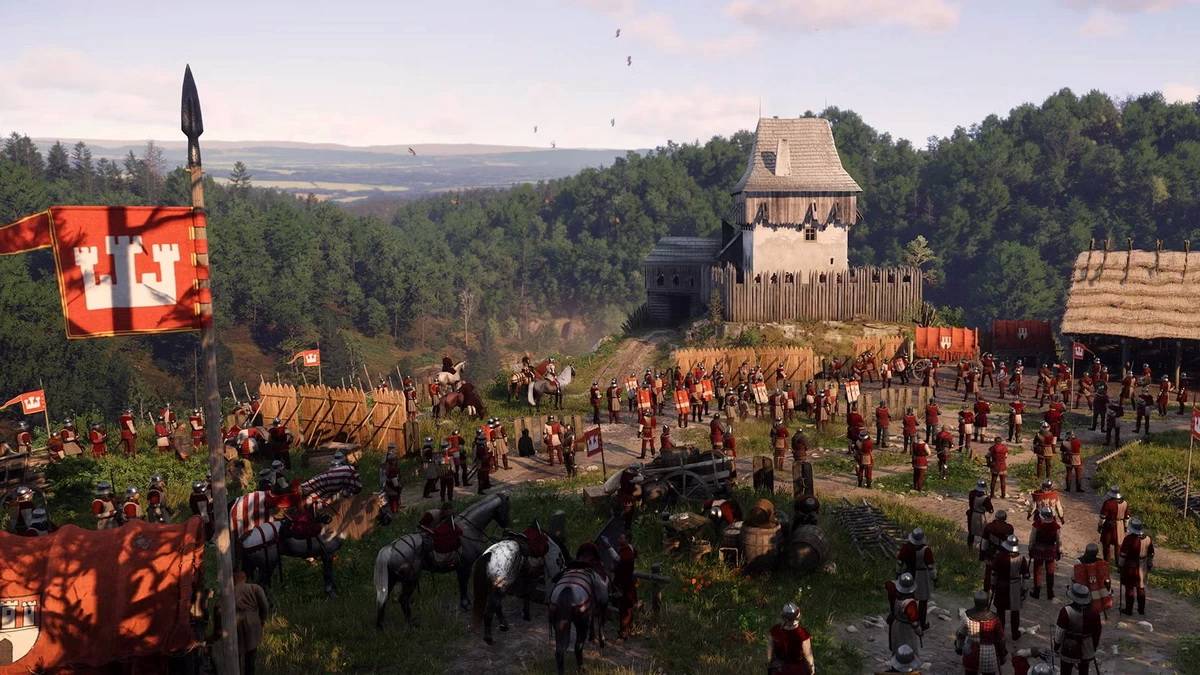
Testing the DLC on PC (Ryzen 5 7600x, RTX 3070 Ti, 16 GB RAM), the visual updates included in Warhorse's concurrent patch are immediately noticeable. The game now features full, robust facial animation support across all localized voiced languages, which significantly cleans up the awkward lip-syncing issues that plagued earlier builds of the game.
The visual presentation of the forge itself is stunning. Watching the dynamic shadows dance across your private chambers as the furnace roars to life at night is peak atmospheric immersion. The physical act of working the steel is accompanied by heavy, metallic sound effects that carry excellent acoustic weight. While the game still possesses a bit of that classic "Warhorse jank"—including clothing clipping issues and your horse occasionally running in tight loops when called—the performance stayed locked at a smooth, stable frame rate during our time in the city.
| DLC Details | Technical Specifications |
|---|---|
| Title | Kingdom Come: Deliverance II – Legacy of the Forge |
| Developer / Publisher | Warhorse Studios / Deep Silver |
| Release Date | September 9, 2025 |
| Price | $13.99 USD / €13.99 |
| Platforms | PC, PlayStation 5, Xbox Series X|S |
The Verdict: Is Legacy of the Forge Worth Your Groschen?
Legacy of the Forge is a modest, occasionally uneven expansion that succeeds on the back of its sheer cozy charm. There is an undeniable therapeutic rhythm to the mundane routine it introduces: waking up at 6 AM, feeding Mutt, eating a hearty bowl of stew, preparing your tools for the day's commissions, and spending the afternoon hammering steel before heading to the tavern to get drunk and insult a few town guards.
The sales chest mechanics are flawed, the delivery quests are tedious, and the story lacks the heavy emotional closure we expected for Henry’s core family arc. Yet, despite these shortcomings, stepping back to survey your fully customized, operational forge yields a genuine sense of accomplishment. For $13.99, it provides a warm, nostalgic slice of medieval life that series veterans will thoroughly enjoy—just don't expect it to completely revolutionize the base game's economy.
Pros:
- Deeply satisfying forge customization and progression.
- The Blacksmith Prestige mechanic prevents wealth-breaking progression.
- Excellent atmospheric sound design and lighting.
- Vivid, lore-rich callbacks to Martin’s hidden history.
- Glacial and unrewarding Sales Chest mechanics.
- Tedious errand-boy delivery quests for commissions.
- Core story companions fail to react to your new status.
Final Score: 7.8 / 10